Describe how to read quran with tajweed that retains the beauty and significance of the verses while assisting Muslims in reciting the text as it was revealed. Here, we’ll go over some fundamental Tajweed guidelines for newcomers.
How to read quran with tajweed
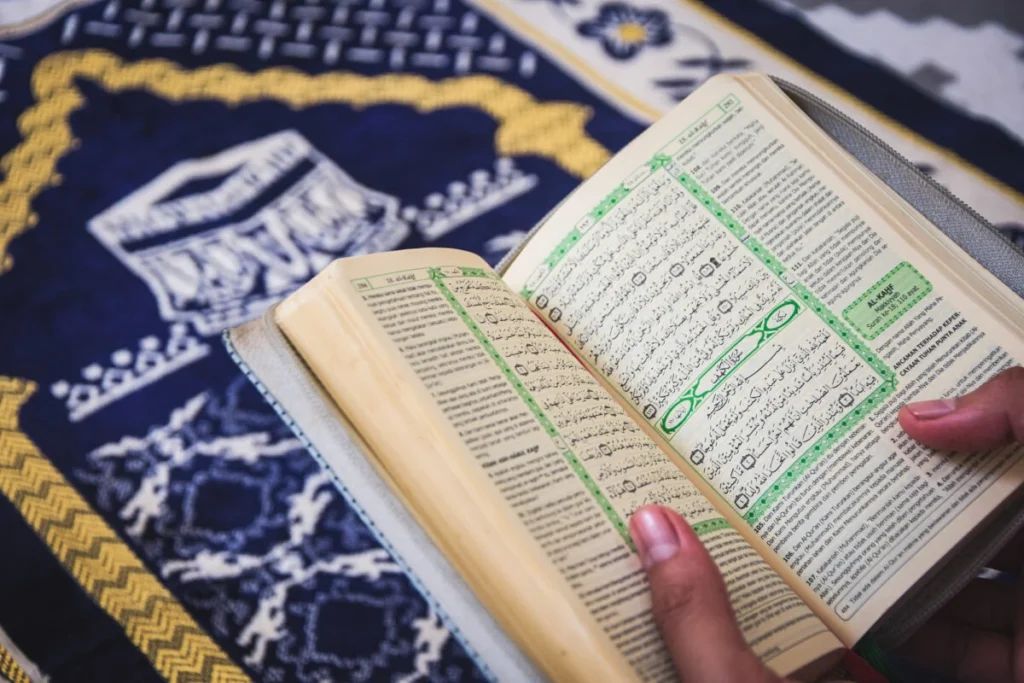
Tajweed, which translates to “improvement of the Qur’anic recitation,” aims to prevent errors in the recitation of the Holy Qur’an to ensure the purity of pronunciation for both readers and reciters.
For Muslims, reading the Qur’an is a tremendous form of devotion. When reading the Qur’an, Muslims should refrain from making phonetic or grammatical mistakes. Tajweed became an essential science in Islam as a result. So, let’s know more about how to read quran with tajweed.
Tajweed’s Significance
The science of Tajweed seeks to maintain the unique phonetic subtleties that were revealed to Prophet Muhammad (peace be upon him) in the Quran.
Tajweed safeguards the Quran from alteration and distortion, guarantees that the recitation is as similar to the Prophet’s own as feasible, and enhances the reciter’s delivery. Tajweed is a kind of worship that demonstrates the reciter’s reverence for the Quran.
Principles of Tajweed
The following is a summary of how to read quran with tajweed and some main tenets or regulations of tajweed:
- Makhraj: The areas of the mouth where the various Arabic consonants are articulated.
- Harakat: Short vowel sounds are added to some letters to show how they should be pronounced.
- Sifat: The features of the various Arabic letters, such as their harsh or smooth pronunciation.
- Maddah: The prolongation of particular sounds for a predetermined amount of time.
- Ikhfa: The whole or partial masking of some sounds.
- Idghaam: The blending of certain sounds.
- Ikhtihaar: The loud emission of certain noises.
- Qalqalah: The way some sounds vibrate.
- Tafkheem: The focus on certain sounds.
- Shaddah: To emphasize a point, certain letters are doubled.
Muslims may make sure they are correctly reciting the Quran and accurately communicating its meaning and message by understanding and using the norms of tajweed.
Tajweed helps us recite in a style that is more similar to how the Quran was revealed. Let’s understand what it is and how to read quran with tajweed. For these reasons, all Muslims work to improve their intonation and become proficient reciters in general.
Recognize the Fundamental Tajweed Rules
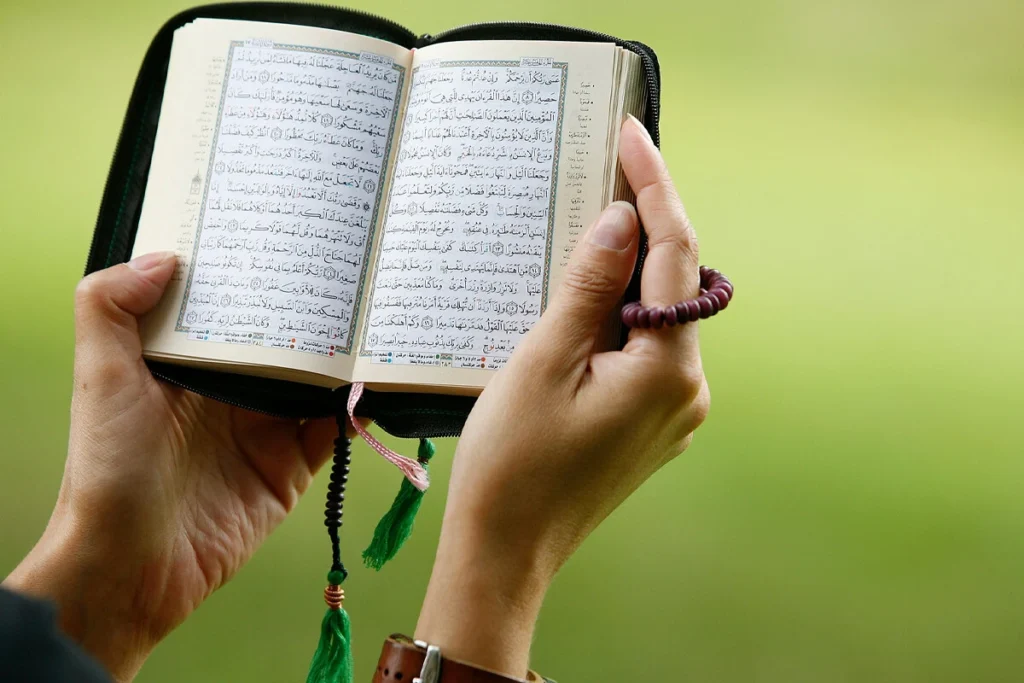
By controlling letter articulation (Makharij), elongation (Madd), nasal sounds (Ghunnah), and particular pronunciation guidelines for Noon/Meem Sakinah, basic Tajweed principles guarantee proper Quranic recitation, and knowing how to read quran with Tajweed prevents errors. Important guidelines include Qalqalah (echoing), Idgham (merging), Ikhfa (hiding), and differentiating between heavy (Tafkheem) and light (Tarqeeq) characters.
Essential Elements of Tajweed
- Each Arabic letter has a distinct departure point in the throat, tongue, lips, or nasal cavity, according to Makharij al-Huruf (Articulation Points).
- Sifaat (Characteristics): Features that distinguish letters, such as lightness (Tarqeeq) or heaviness (Tafkheem).
- Pronouncing short vowels correctly (Fathah, Kasra, Dammah) is known as Harakaat (Movements).
Crucial Guidelines for Novices
- Noon Sakinah & Tanween (ْ / ً ٍ ٌ): Izhar (Clear): Clearly pronounce the letter “N” if it is followed by [ء ه ع ح غ خ].
- Idghaam (Merge): Combine into the next letter (without Ghunnah for [ل ر], with Ghunnah for [ي ن م و]).
- Iqlab (Convert): When ‘N’ is followed by ‘Ba ب’, it becomes a ‘Meem’ (م) sound.
- Ikhfaa (Hide): Before the next fifteen letters, slightly nasalize the letter “N.”
- Meem Sakinah (مْ): Ikhfaa Shafawy: ‘M’ followed by ‘B’ (ب) necessitates concealment with Ghunnah.
- Idghaam Shafawy: Merging occurs when ‘M’ is followed by ‘M’ (م).
- Izhaar Shafawy: The letter “M” is pronounced clearly after any other letter.
- Ghunnah (Nasal Sound): When a Noon or Meem has a Shaddah (نّ / مّ), make a two-beat nasal sound.
- Qalqalah (Echoing Sound): When letters ق ط ب ج د have a sukoon (silent) or stop on them, they produce a bouncing sound.
- Al-Madd (Elongation): Extending the prolongation letters (ا و ى). Other varieties (Muttasil/Munfasil) might be 4-6 beats, but Basic (Natural) Madd is 2 beats.
Crucial Advice
- Allah (Word): If Fathah/Dammah comes first, read with a full mouth (Tafkheem); if Kasrah comes first, read lightly (Tarqeeq).
- Ra (ر): Light when it has a Kasrah, bold when it has a Fathah/Dammah (or sukoon before by one).
- Errors: To avoid changing the meaning, steer clear of obvious errors, such as using the incorrect letter or vowel.
- Using a color-coded Quran (Tajweed Mushaf) makes it easier for novices to recognize these guidelines when reciting.
Learning Tajweed Rules: Advantages
Learning Tajweed rules and knowing how to read quran with tTajweedhas several advantages, including
- You can profit both practically and spiritually from it.
- Enhances the Quran’s recital
- Allows you to understand the guidelines for reading the Quran
- Improves comprehension of the Quran
- It can assist you in learning the Quran by heart.
- It enhances Arabic communication abilities.
Benefits of using Itqan Academy to study Tajweed
- Get a trial for free.
- Learn Tajweed at your own speed.
- may be acquired from any location in the world.
- Learn Tajweed with ease.
- Please register for the course and sign up for the free trial lesson.
- In conclusion, Tajweed is an Arabic phonetic science that was initially developed for Qur’anic reading. It covers every letter’s articulation points in depth as well as the constant and variable properties of every sound.
Learn How to Pronounce the Arabic Letters & How to Read Quran with Tajweed
The 28 letters that constitute the Arabic alphabet are written from right to left and are all consonants with distinct guttural and emphatic sounds. Alif (a), Ba (b), Ta (t), and special sounds like Haa (deep H), ‘Ayn (throat), and Dhad are important letters. Learning letter forms—which vary according to position—is necessary for mastery (beginning, medial final).
Conclusion related to how to read quran with tajweed
Tajweed is a profound and lovely practice that enhances the experience of reciting the Quran by fostering a deeper connection between the reciter and the listener and Allah’s words.
It is a path of ongoing education and development that offers spiritual benefits as well as the fulfillment of maintaining the integrity and beauty of the Quran.
As Muslims, we can honor the Quran and its significance in our lives by making a commitment to learn and practice Tajweed.
This will ensure that the Quran is correctly recited and understood for future generations.
Itqan Academy provides organized online Quran lessons with certified instructors that walk students through the process step-by-step. If you are keen to learn how to read quran with tajweed. Improve your Quranic recitation from the comfort of your home by enrolling in our interactive classes now.