During Eid al-Adha, Qurbani rules in Islam are a customary animal sacrifice that honors Prophet Ibrahim’s (AS) willingness to sacrifice his son. According to the Hanafi school, it is a required act (Wajib), and most other schools encourage it as a Sunnah for all Muslims who can afford it.
Qurbani rules in Islam
Islam emerged as a set of rules for all Muslims worldwide. A heavenly method that instructs Muslims on how to spend their life as best they can to please Allah Almighty and His Paradise, “Jannah.”
During Eid al-Adha, Qurbani is a customary animal sacrifice that honors Prophet Ibrahim’s (AS) willingness to sacrifice his son. When Allah SWT requested the Prophet Ibrahim (PBUH) to sacrifice his only child, Ibrahim showed Allah Almighty love and devotion, which is reflected in the name Qurbani, which is a concept in Islam.
Allah Ta’ala intended for us Muslims to learn two lessons from the life of Prophet Ibrahim (PBUH):
- Feeding the hungry is Qurbani’s ethical message.
- The spiritual lesson of Qurbani is to draw nearer to Allah Ta’ala.
Allah (SWT) wants to teach us Muslims how to help one another in this Ummah, to learn that no Muslim is left behind and that we need to feed the hungry and help the needy. It is an act of unadulterated devotion and love to Allah Subhanahu Wa Ta’ala to perform all good deeds for the sake of Allah Almighty.
Udhiyya: What is it?
The animal offered as a sacrifice for Allah during the Days of Sacrifice is known as udhiyya.
The Qur’an, Sunnah, and ijma (consensus) all provide instructions for doing this sacrifice. “Therefore, to your Lord turn in prayer and sacrifice,” Allah commands Muslims in the Qur’an (Qur’an 108:2). “There is a lot of good in the sacrificial camel that we made for you as a sign.” As they queue up, mention Allah’s name. Eat them once they are killed, and feed both the rich and the poor (Qur’an 22:37).
The Prophet (peace be upon him and his family) sacrificed an animal and instructed his followers to do the same, according to a wealth of Hadith. The Prophet (peace be upon him and his family), for instance, is claimed to have declared, “There is no action that the son of Adam does on the Day of Sacrifice more beloved to Allah than sacrificing an animal.”
Every scholar agrees with the institution of Udhiyya.
Who Has to Give Qurbani?
Qurbani rules in Islam apply for who:
- Wealth criterion (Nisab): Adult Muslims who have more wealth than they require are required to meet this criterion, which is now 87.48g of gold or 612.36g of silver.
- Family Rules: Generally speaking, each capable person must make their own sacrifice. However, if one of them has the requisite wealth, a husband and wife may donate on the other’s behalf.
Useful Manners for Qurbani rules in Islam

Qurbani is a significant Islamic custom that may be carried out with caution, attending to all the necessary Qurbani rules in Islam, and manners like:
- A sacrifice must meet certain criteria, such as being financially capable, mentally sound, and an adult.
- After the first day of Dhul Hijjah, anybody planning to perform qurbani during the days of Eid al-Adha is prohibited from cutting their hair or nails until their animal has been killed and the meat has been distributed in accordance with Islamic law.
- You can do the qurbani on your own behalf or, if you’d like, on behalf of another Muslim.
- The Sunnah requires strict adherence to animal slaughtering etiquette. This should not be done in front of the animal that will be sacrificed, and the knife has to be extremely sharp and well-prepared. No animal shall be slaughtered in front of another animal; before any animal is killed, Allah’s name must be spoken.
- A little animal can be slaughtered on behalf of one person, and a large animal can be sacrificed on behalf of seven, according to the principles of qurbani, which Muslims must understand.
- Meat will be distributed in accordance with Allah’s will, as stated in the Quran: “Eat of them and feed the contented and the beggar.” Al-Hajj Surah (22:36)
- According to this ayah, there should be three portions of qurbani meat: one for sacrifice, one for friends and family, and one for those in need.
- According to the hadith below, animal skins can be donated to any charitable organization instead of being sold for cash. “Whoever sells the skin of his sacrifice, there is no sacrifice for him,” said the prophet ﷺ. Mustadrak al-Hakim (Authenticated by al-Dhahabi)
Acceptable Animals and Ages:
- Goats or sheep must be at least one year old. One animal is equivalent to one share (for one person).
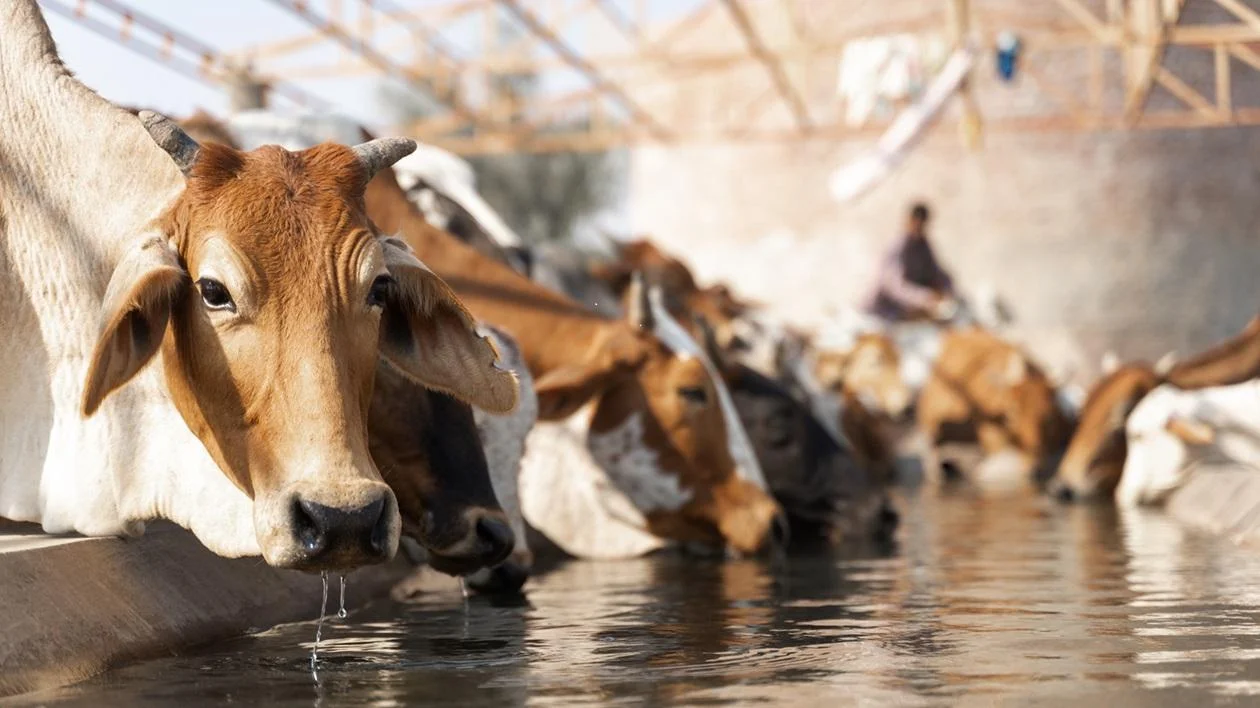
- Cows or Buffalo: Minimum (2) years old. Seven shares are represented by one animal, which can be divided among seven individuals.
- Camels: 7 shares, at least 5 years old.
- Condition and Condition: The animal must be in good condition and devoid of serious flaws such as acute emaciation, severe blindness, lameness, or missing teeth.
Qurbani Rules in Islam for Timing and Slaughter
- Timing: On the 13th of Dhul Hijjah, the sacrifice must be carried out after the Eid al-Adha prayer till dusk.
As Qurbani, sacrifices offered before the Eid prayer are void.
Guidelines for Slaughtering:
It must be done with a keen knife.
The animal shouldn’t observe another animal being killed or the knife being sharpened.
After the slaughter, recite Allah’s name (“Bismillahi Allahu Akbar”).
Don’t skin the animal until it is totally cool.
Rules for Meat Distribution:
- According to the Sunnah, the meat should be divided into three equal portions:
- A third is kept for the donor and their family.
- One-third: Given to relatives, neighbors, and friends.One-third: Given to the underprivileged and destitute.
Conclusion about Qurbani rules in Islam
One of the most Eid al-Adha significance in Islam acts of worship in Islam is qurbani. Its Qurbani meaning encompasses more than just physical sacrifice; it also symbolizes compassion for others, obedience to divine mandate, proximity to Allah, and remembrance of Prophet Ibrahim A.S.
While the genuine Sunnah outlines how the sacrifice should be made, the Quran teaches that piety is the most important thing. Muslims can approach Eid al-Adha with greater knowledge and sincerity if they comprehend Qurbani rules in Islam, know who should donate Qurbani, and recognize the spiritual value underlying the gesture.