
For each Muslim making the Hajj, the Hajj rituals need to be explained; the daily Hajj rites provide a profound spiritual direction. This essay explains each rite clearly and succinctly so that you may perform the Hajj with confidence, introspection, and purpose—whether you’re doing it for the first time or just want to learn more.
Hajj rituals explained
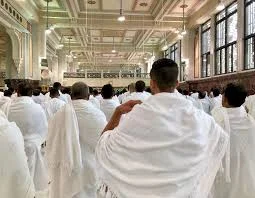
The fifth pillar of Islam is the five-day pilgrimage known as the Hajj. All Muslims who are financially and physically capable must fulfill this Islamic obligation at least once in their lives. During the 12th Islamic month of Dhul-Hijjah, the ceremonies are performed at Mecca and the nearby towns of Mina, Arafat, and Muzdalifah.
When we Hajj rituals explained, we must know that the Hajj, the spiritual journey to Makkah, is more than just a yearly pilgrimage; it is a fundamental aspect of Islam and is held in the hearts of Muslims everywhere. The Hajj, one of the Five Pillars of Islam, is a rite of passage rather than just a travel.
When Did the Hajj Get Started?
In the latter half of the ninth year of the Hijrah, the Hajj was mandated.
“And [due] to Allah from the people is a pilgrimage to the House” (Al-Imran: 97) is the passage that made it mandatory.
Most scholars believe that this surah was revealed in the latter part of the ninth year during the Year of Delegations. Because the verse was revealed after the time had passed, the Prophet (peace be upon him) postponed conducting the Hajj until the ninth year. He only made one Hajj following his relocation, in the eleventh year.
The Hajj’s pillars | Hajj rituals explained
A summary of each pillar and its deeper meaning is provided below. These pillars are the Hajj rituals explained and the cornerstone of a legitimate journey, and skipping any of them renders the Hajj invalid:
-
Ihram
Purification, or ihram, is the first pillar of the Hajj. Wearing white clothing and reciting the intention (niyyah) to undertake the Hajj before crossing the miqat—the recognized border for accessing the holy area—are ways to identify it.
Ihram must be entered at the Haram’s edge (the hallowed area around Makkah’s Masjid al-Haram). All ihram prohibitions come into force as soon as the intention is made, and the Hajj rites begin.
Ihram is a symbol of cleanliness. The basic, unstitched clothing, akin to a baby clothed solely in fabric, symbolizes the pure and uncomplicated nature of a human being at birth.
-
Wukuf
To conduct wukuf, one must stand (or stay) in the Arafah plain. The date of this event is Dhu al-Hijjah 9.
Wukuf is the core of the Hajj, according to the Prophet Muhammad (peace be upon him).
Hajj rituals explained when Wukuf that heppen while the sun reaches its peak at noon, this act of adoration commences. Wukuf begins with hearing the discourse from Arafah. Following the discourse, pilgrims offer the abbreviated and combined Zuhr and Asr prayers (Jama’ Taqdim).
Wukuf can be done alone or in a group. During wukuf, the Prophet Muhammad SAW advised increased istighfar (asking forgiveness), dhikr (remembering Allah), Qur’anic recitation, and supplication.
A person might contemplate deeply in front of their Lord during the wukuf pillar. We felt that muhasabah (self-evaluation) should also take place during wukuf.
-
Tawaf
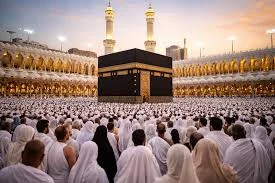
One of the main components of the Hajj rituals explained is the tawaf, which entails walking around the Kaaba seven times counterclockwise, or from left to right.
Hajj pilgrims do three different forms of tawaf: Tawaf Qudum, which is performed when they initially arrive in Mecca. After the jamrah is stoned, Tawaf Ifadhah is performed. Before departing Mecca, Tawaf Wada is performed as a goodbye.
Tawaf is an act of worship that is highly encouraged. Tawaf represents how life revolves, beginning and finishing at the same location.
-
Sai
Sa’i is the fourth pillar of the Hajj that we must mention when we talk about Hajj rituals explained. It entails jogging or strolling between the Safa and Marwah hills. The Arabic verb that means “to run” or “to walk briskly” is where the phrase “sa’i” originates.
As soon as the intention is made, the Hajj rites begin, and all ihram prohibitions come into force. According to Aisyah RA, the Prophet Muhammad SAW said:
The practice of sa’i honors the battle of Prophet Ismail’s mother, Hajar. Hajar rushed in search of water between the hills of Safa and Marwah after giving birth. The spring of Zamzam eventually erupted when Allah worked a miracle through newborn Ismail’s heel strike.
Sa’i is a representation of effort. One must always strive in life.
-
In Order and Tahallul
After completing the Hajj ceremonies, shaving or cutting one’s hair is referred to as tahallul. The ihram state comes to an end at this point.
Tahallul signifies sinlessness and humility. Shaving one’s head is a sign of selflessness and liberation from conceit. It symbolizes a person’s readiness to give up material pride in favor of spiritual purity.
Above all, everything needs to be done in the correct order. Every pillar needs to be finished in order, without omitting any steps. The significance of this Hajj rituals explained: The Hajj is invalid if the order is not followed correctly.
Concluding Remarks on Hajj Rituals Explained
The Hajj is not a vacation. It’s not a cultural occasion. It’s an encounter with your Creator.
The purpose of every Hajj ceremony was to reveal the layers we conceal in daily life. The prestige, the accomplishments, the titles. And leave you standing just as you are—a servant of Allah.
The Hajj is a journey that requires you to physically relocate from one location to another. The actual voyage, however, is within. From your pre-Ihram self to your post-farewell Tawaf self.
That is the pledge. A blank canvas. A clean slate. A fresh iteration of you.
And for that reason, it is crucial to comprehend the significance of the Hajj ceremonies. Because you give your all when you know why you are doing something. And it’s the Hajj version that transforms you.
Strengthening your everyday relationship with Allah is the first step towards laying the spiritual groundwork for your Hajj preparation. A nice place to start is with this Tahajjud prayer guide.
With Itqan Academy’s planner, you may begin your path to a balanced and barakah-filled life right now.