Tajweed, which translates to “beautification of pronunciation,” is the collective term for the guidelines for Quran Recitation Rules. Tajweed guarantees that the Quran is recited with flawless intonation and voice augmentation, just as it was revealed.
Quran Recitation Rules
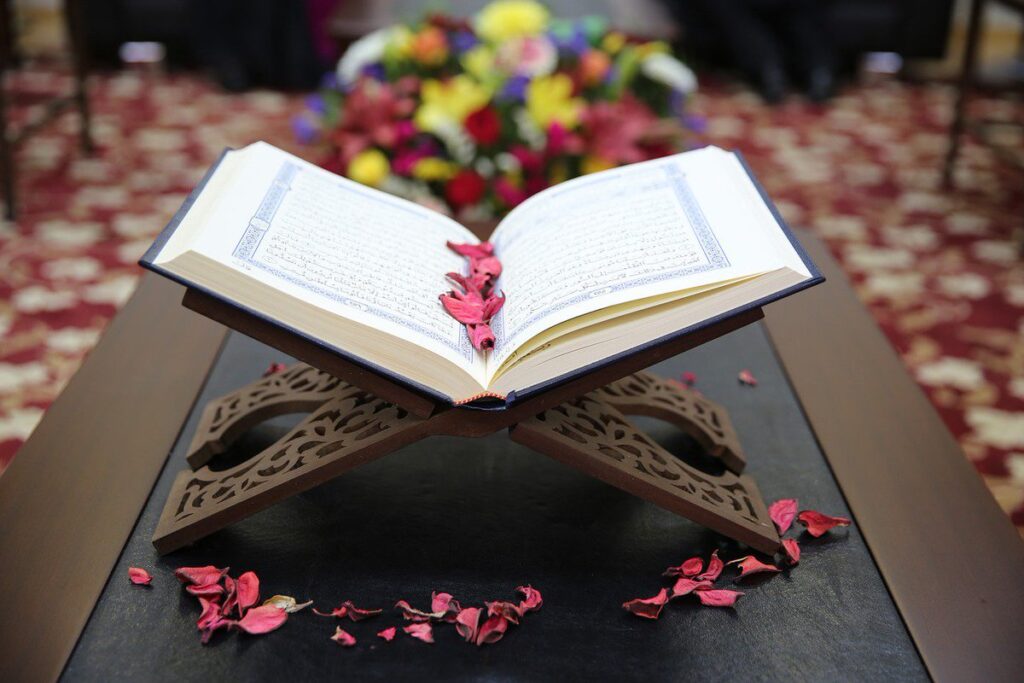
Correct recitation of the Quran involves more than just reciting the text; it also involves respecting the manner in which it was revealed. Muslims can improve their tilawah in accordance with Tajweed principles, pronounce every letter correctly, and prevent errors by learning the standards of Quran recitation rules.
To maintain proper recitation, systematic learning becomes even more crucial for families residing in non-Arabic surroundings.
What Are the Quran Recitation Rules?
Along with spiritual etiquette like cleanliness (Wudu), facing the Qiblah, and starting with Ta’awwudh and Basmala, Quran recitation rules, guidelines, or Tajweed, specify the proper pronunciation, articulation, and elongation of letters to retain the original meaning.
Important guidelines include particular stops (Waqf), nasal sounds (Ghunnah), and correct articulation (Makharij).
Crucial Recitation Etiquette
- Purity: Before handling or reading the Quran, do Wudu, or ablution.
- Intention & Respect: Begin with A’oozu Billaahi minash shayta nir rajeem and Bismillah Hir Rahman Nir Raheem.
- Setting: Take a seat facing the Qiblah in a spotless, peaceful area.
- Behavior: Recite at a leisurely pace (Tarteel), concentrating and avoiding superfluous chatter.
Fundamental Tajweed Rules (Flow and Pronunciation)
- Makharij Al-Huruf: Accurate sound creation with proper articulation points for every letter.
- Ghunnah: A nasal sound used in response to certain letters, particularly when a Meem (م) or Noon (ن) has a Shaddah.
- Madd (Elongation): Extending letters while maintaining a Madd letter for the appropriate amount of time.
- Rules for Noon Sakinah and Tanween: When a silent “n” or tanween is followed by specific letters:
- Ithjar (Clear): Clearly pronouncing the sound, especially when using throat letters.
- Idgham (Merging): Combining sounds, such as Noon or Meem.
- Iqlab (Conversion): Replacing the sound with a concealed “m.”
- Ikhfaa (Concealment): Masking the noise.
- Qalqalah: When certain paused letters () are uttered, an echo sound is produced.
- Waqf (Stopping): Knowing when to pause and stop to preserve the intended meaning.
Following these guidelines guarantees that the Quran is read exactly as it was revealed, avoiding distortion and improving the recitation’s beauty.
The Most Crucial Guidelines for Quran Recitation Rules
- Purity & Location: Make sure your body and clothing are clean, do Wudhu (ablution), and take a seat facing the Qiblah in a quiet, respected spot.
- Beginning and Ending: Start with Bismillah ir-Rahman ir-Rahim and A’udhu billahi minash-shaytanir-rajeem.
- Think & Focus: Focus on understanding the message (Tadabbur) while reciting quietly (Tuma’neenah).
- Avoid Distractions: Don’t interrupt or chat while you’re reading.
Why It’s Important to Learn Quran Recitation Rules
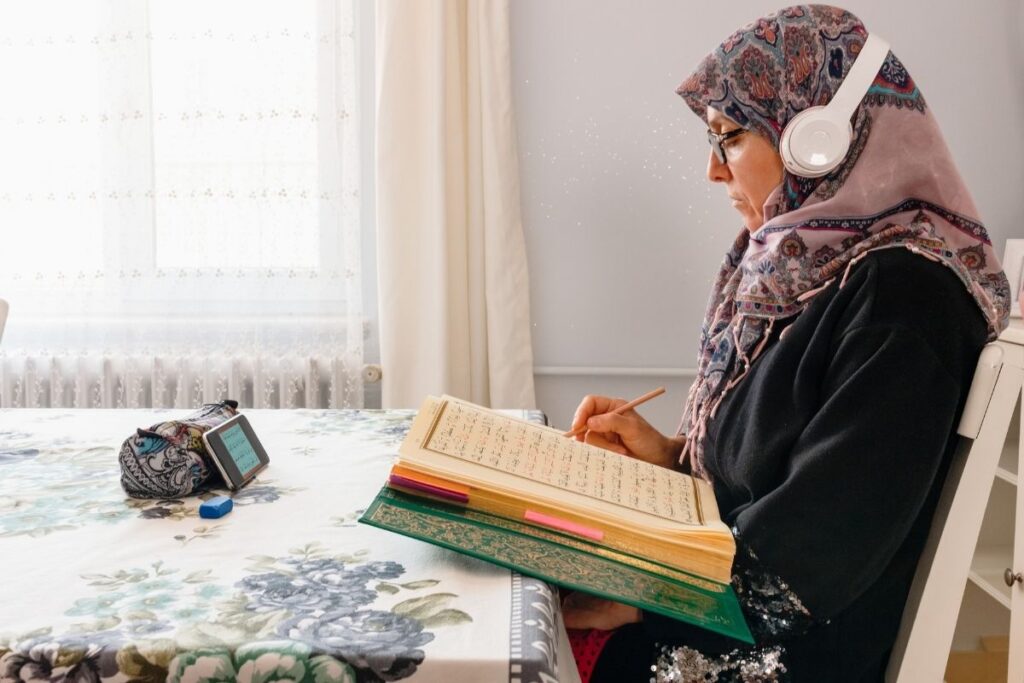
To maintain the validity, significance, and beauty of the Quranic text and to ensure that it is repeated precisely as revealed to the Prophet Muhammad, it is essential to learn Quran recitation norms, or Tajweed. It satisfies the duty to recite with accuracy and reverence, protects against mispronunciation that might change meanings, and promotes spiritual connection.
Important Motives for Learning Tajweed
- Maintaining Meaning and Integrity: Because Arabic is a precise language, even little pronunciation mistakes can drastically alter a verse’s intended meaning. Tajweed makes sure the message is accurate.
- Respect for Revelation: Muslims are expected to uphold the sanctity of the Quran by adhering to the rules that were revealed with it.
- Accurate Pronunciation (Articulation): Accurate pronunciation of every word is ensured by learning the correct places of articulation (makharij) and letter characteristics (sifat).
- Enhancing Beauty and Fluency: Tajweed increases the recitation’s impact on the listener by adding harmony, rhythm, and beauty.
- Spiritual Connection: Accurate, fluid, and rhythmic recitation fosters a closer relationship between the reciter and Allah’s verses, strengthening devotion and concentration.
- Validating Prayer: The validity of daily prayers depends on proper recitation, particularly for Surah Al-Fatiha.
The Significance of Understanding Quran Recitation Guidelines
It is crucial to understand Quran recitation rules, or Tajweed, in order to preserve the validity, relevance, and beauty of the Quranic text and to guarantee that it is recited exactly as revealed to the Prophet Muhammad.
It guards against mispronunciation that might alter meanings, fulfills the need to recite with precision and reverence, and fosters spiritual connection.
Important Tajweed Rules
- Makharij al-Huruf: Accurate letter pronunciation.
- Sifat al-Huruf: Recognizing the qualities of letters, such as light or heavy sounds.
- Guidelines for Sound Modification: learning norms such as Madd (lengthening), Iqlab (changing), and Idgham (merging).
- Qalqalah: Using a sukoon to apply the echoing sound for particular letters.
Guidelines for Children and Novices to Recite the Quran
Building a foundation via appropriate Makharij (articulation points), fundamental Tajweed norms like Ghunnah (nasal sound) and Madd (elongation), and regular, gradual practice are the main goals of Quran reciting for youngsters and novices.
Crucial Guidelines for Novices (Tajweed Fundamentals)
- Pronouncing letters correctly from the lips, tongue, and throat is known as Makharij (Articulation Points).
- Ghunnah (Nasal Sound): Maintaining the sound on Noon and Meem Mushaddad (نّ / مّ) for two beats.
- Madd (Elongation): Making sounds on some letters last for two beats.
- Qalqalah (Echoing): A “bouncing” sound that occurs when a letter (ق ط ب ج د) has a sukoon or at the end of a stop.
- Noon Sakinah & Tanween: ‘n’ sound management principles (Iqlaab, Ikhfaa, Idhaar, and Idghaam).
- Full Mouth Letters: Recognizing letters that need to sound thick (Raa).
How to Teach Children (Tips & Techniques)
- Listen & Repeat: Use audio recordings of expert Qaris for children to imitate.
- Break it Down: Break long verses into smaller words or syllables.
- Playful Approach: Keep sessions short and engaging for children.
- Start Small: Begin with short surahs (e.g., Al-Fatiha, Al-Ikhlas).
- Consistency: Daily, short, focused practice is better than long, infrequent sessions.
- Etiquette of Recitation
- Cleanliness: Ensure body, clothes, and surroundings are clean.
- Wudhu: Perform Wudhu before touching or reciting the Quran.
- Respect: Sit in a respectful, preferably Qiblah-facing, position.
Key Resources
- Noorani Qaida: A standard book for learning Arabic letters and basic Tajweed.
- Online Tutors: Specialized online classes for children, e.g., Itqan Academy.
- Apps and YouTube: Make use of internet resources for repetition and listening.
It is appropriate to recite the Quran as it was revealed.
You may turn reading into authentic tilawah—accurate, lovely, and fulfilling—by gradually mastering the norms of Quran recitation.