One of the most effective ways a Muslim can speak with Allah is via dua, or supplication in Islam. A person can communicate their wants, hopes, thanks, and dependence on Allah through this direct link with the Creator.
Dua is a continual source of consolation and direction for Muslims since it may be performed anywhere and at any time, unlike many other kinds of religion.
Supplication in Islam

We seek Allah’s assistance when we are depressed or anxious. He clears the fog of the world from our hearts and spirits. Our methods of healing are du’a and supplication. We are guided and purified when we remember Allah. We are lifted out of darkness by it.
Muhammad, peace be upon him, the Prophet of Allah, stated:
Avoid talking too much without acknowledging Allah. Talking too much without acknowledging Allah indeed hardens the heart. The harsh-hearted are, in fact, the ones who are farthest distant from Allah.
In Islam, the Muslim’s weapon is dua and supplication. They are the most effective means of becoming nearer to Allah. According to the Sacred Quran, Allah will answer our call. When we ask for assistance, he will comply.
Islam’s Appreciation of Supplication
Prophet Muhammad (PBUH) said: “The core of worship is dua.” (Tirmidhi)
Why Supplication in Islam Is Essential to Worship
- Affirmation of Faith: When a believer does dua, they admit that Allah is their only supplier and sustainer.
- Expression of Need: Dua acknowledges human limits and expresses a Muslim’s reliance on Allah.
- Spiritual Connection: A solid, intimate relationship with Allah is fostered by persistent prayer.
- Act of Humility: Dua serves as a reminder to Christians of their dependence on divine compassion.
- This spiritual connection is the source of Dua’s strength in Muslim life, which gives worship significance and transformational force.
The Ideal Times to Pray
The optimum times to offer supplication in Islam (dua) are when they are most likely to be accepted. These periods include the final third of the night (Tahajjud), during prostration (sujood), between the adhan and iqamah, and on Friday (more precisely, the hour before sunset). Rain, fasting, traveling, and Laylat al-Qadr are other instances that are strongly advised.
Important Times for Dua (Accepted Supplication):
- As Allah descends to the lowest sky and beckons for those who would beg of Him, the Last Third of the Night is regarded as the ideal period.
- Sujood, or prostration, is the best time to ask for anything since it brings a believer closer to their Lord.
- Between Adhan and Iqamah: There is a fortunate period of time between the call to prayer and the start of the required prayer.
- Friday: In particular, prayers are accepted during the final hour before Maghrib, or sunset.
- When fasting and breaking the Fast: It is highly acceptable for someone who is fasting to pray.
- When it’s raining: This is a unique time for the acceptance of prayers.
- A traveler’s dua is accepted while they are on the road.
- When Oppressed or Distressed: When someone is in difficulty, their cry is heard.
- Tahajjud: The prayer at night.
- The Day of Arafah is renowned for the widespread adoption of prayer.
- Laylat al-Qadr: Ramadan’s Night of Power.
- General Dua Etiquette: Although you can perform dua at any moment, it is better to approach Allah with humility, sincerity, and perseverance. You should begin by giving thanks to Allah and honoring the Prophet Muhammad (ﷺ).
Educating Kids About Supplication in Islam
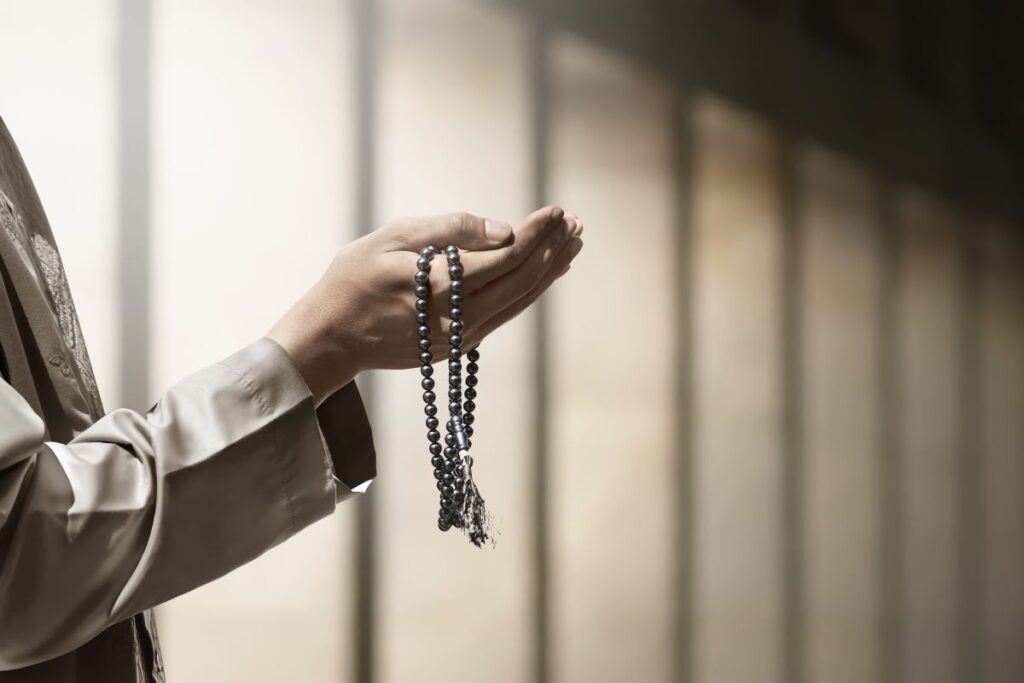
The greatest way to teach children supplication in Islam (dua/prayer) is to model it for them from an early age and make it a regular, natural habit. Instead of concentrating just on conventional forms, encourage children to use their own words to communicate with God, emphasizing thanks for everyday gifts, protection, and needs.
Techniques for Instruction in Supplication
- Set an Example: Youngsters learn knowledge through observation. Regularly pray with them before bed, during mealtimes, and in the morning.
- Make it Simple and Personal: Encourage children to communicate with God using their own words, discussing their day, their pleasures, and their anxieties, just like they would with a friend.
- Begin by expressing gratitude: To help kids recognize God’s blessings, ask them to list one item they are grateful for every day.
- Make Use of Daily Routines. Incorporate brief “huddle” prayers for protection or when driving, highlighting the fact that prayer may take place anywhere.
- Instruct Particular Applications: To construct a spiritual, protective barrier, introduce basic, everyday Duas from the Sunnah (e.g., upon waking up, eating, or for pain).
- Important Ideas to Teach God Loves to Hear Them: Assure kids that God hears their prayers, no matter how old they are.
- Persistence and Patience: Describe how God occasionally says “no” or “wait,” and that He is aware of what is best for us.
- Make use of the Quran: Teach them basic prayers such as Ayatul Kursi and Surah Al-Fatiha.
Make it a pleasurable connection rather than a rigid, frightening responsibility.
Conclusion related to supplication in Islam
In conclusion, supplication in Islam is a symbol of faith, hope, and confidence in Allah rather than just a request for anything. A believer who consistently makes dua maintains a connection to their Creator in all circumstances.
The Transformative Power of Duaa Duaa is a powerful manifestation of religion that provides a means of achieving personal change, resilience, and spiritual connection.
It is an essential part of prayer and a source of solace and direction throughout one’s life, and its significance in Islam cannot be emphasized. A life enhanced by spiritual fulfillment and heavenly favor might result from sincerely and understandingly embracing duaa.
Recite the Quran and make meaningful prayers to deepen your relationship with Allah.
At Itqan Academy, we provide a safe online learning environment where students of all ages may learn the Quran, Tajweed, and real daily duas from knowledgeable instructors.
Start your journey now and make the words of Allah a wonderful part of your daily life, whether your goal is to assist your children grow closer to the Quran or to enhance your recitation.