What is Tajweed Quran? Many Muslims wonder. What matters most, though, is if we are reciting the Quran as it was revealed.
Tajweed is more than a theory. It is the distinction between accurately reciting Allah’s words and inadvertently altering their meaning.
What is Tajweed Quran?
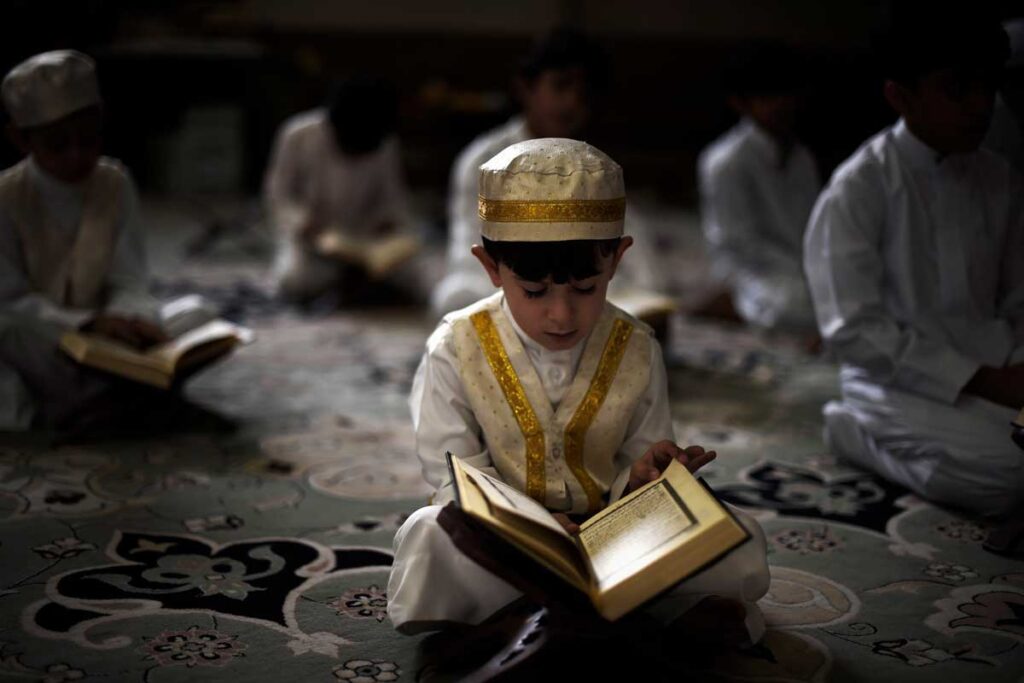
Tajweed is not just a beautiful or melodic recitation, but rather the science and art of accurate Quranic pronunciation—often described as “giving every letter its right (haqq) and its due (mustahaqq)”. What is Tajweed Quran? Tajweed’s main goal is to safeguard the Quranic text from distortion and guarantee that it is recited just as it was revealed, even though a beautiful voice is recommended.
Accuracy Over Performance
- The Arabic root “j-w-d,” which means to improve, make better, or perfect, is where the phrase originates.
- Articulative Accuracy: To guarantee that letters are not confused, Tajweed emphasizes Makharij al-Huruf (the proper articulation sites for each letter) and Sifat (the distinctive qualities of letters, such as heaviness, lightness, or softness).
- Preserving Meaning: A small mispronunciation can change a word’s meaning, turning it from a complimentary comment into something quite different or meaningless.
- Beyond Melody: Although Tajweed adds to the recitation’s beauty, technical accuracy—rather than just having a beautiful voice—is what ultimately makes the recitation lovely.
Crucial Elements of Accuracy
- Pronouncing letters according to their precise origin is known as Makharij (Articulation Points).
- Sifat (Characteristics): Using the appropriate attributes, such as Tarqiq (light) or Tafkhim (heavy).
- Rules of Elongation (Madd): Accurately measuring sound extension.
- Rules of Stopping (Waqf): Understanding when to stop to preserve the intended meaning.
- Combining sounds when letters interact is known as assimilation (Ikhfa) and merging (Idgham).
What is Tajweed Quran & The Importance of Accurate Tajweed?
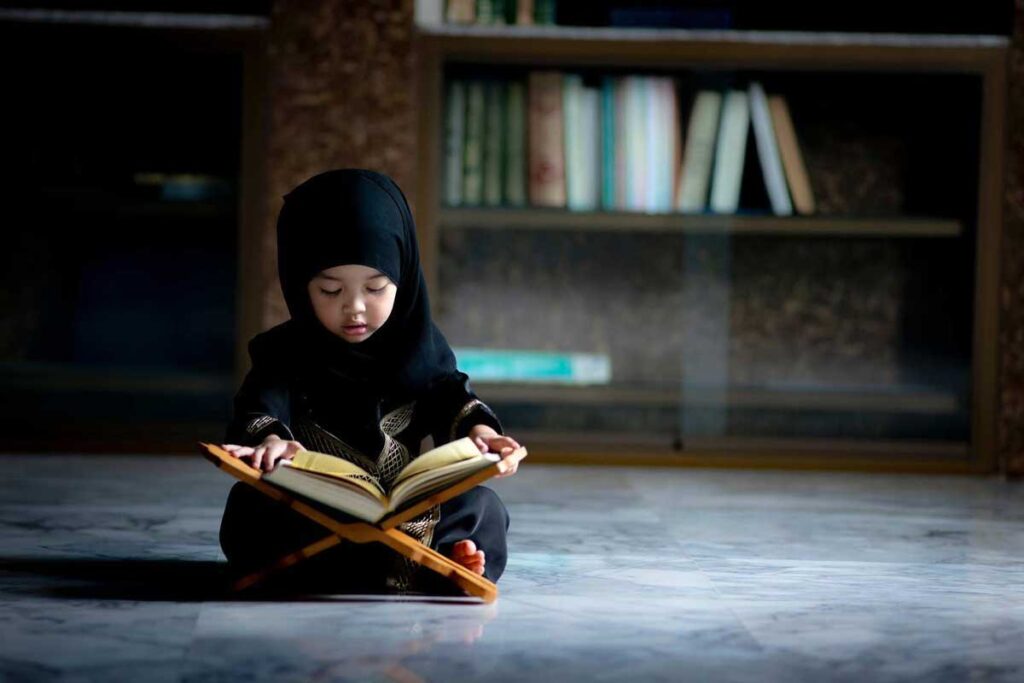
- Obligation (Fard ‘Ayn): Since disregarding the fundamental principles of Tajweed might skew the interpretation of the Quranic text, many scholars view it as an individual obligation.
- Error Prevention (Lahn): It protects against Lahn Khafi (small, concealed flaws that influence the sound’s perfection) and Lahn Jali (big, evident errors that change meaning).
- Spiritual Connection: Precise, deliberate recitation (Tarteel) facilitates more in-depth contemplation and draws the heart closer to the text.
In conclusion, Tajweed is the “engineering” or “architecture” of recitation, guaranteeing that the exact phonetic delivery of the Quranic text preserves its structural integrity.
Typical Errors Without Tajweed
Without Tajweed, reciting the Quran frequently results in both serious errors (Lahn Jali) that change the meaning and small errors (Lahn Khafi) that lessen the correctness and beauty of the recitation. These mistakes typically result from mispronouncing letters, elongating words incorrectly, neglecting nasal sounds, or stopping incorrectly.
The most frequent errors committed in the absence of Tajweed are as follows:
Pronouncing Arabic letters incorrectly (Makharij)
This is the most serious mistake, frequently altering words’ intended meaning.
- Mixing Up Similar Letters: Mixing up letters that have similar sounds, as “seen س” and “saad, ص” “ta ت” and “ṭa ط,” or “dal د” and “ḍad ض.”
- Replacing Letters: You may alter Qalb (heart) to Kalb (dog) by substituting one letter for another, such as ق (Qaf) with ك (Kaf).
- The use of the light ‘h ح’ in place of the deep, scratchy ‘H’ (هـ) can totally change the meaning of phrases, such as Alhamdulillah.
- Mispronouncing “Ain ع” and “Hamza ء”: Non-native speakers frequently make this error by failing to differentiate between the two.
Inaccurate Extension (Madd)
- Shortening Long Vowels: Not stretching the Madd letters (ا, و, ي) for the necessary two, four, or six counts.
- Over-extending Short Vowels: Stretching a Fatha, Dammah, or Kasra (short vowels) alters the syntax of the word by adding a nonexistent letter.
Ignoring Ghunnah’s nasal sounds
- Skipping Ghunnah: When someone has a Shaddah (ّ), they fail to make the nasal sound for two counts on Noon (ن) and Meem (م).
- Weakening the Sound: Violating the Idgham and Ikhfa laws by making the nasal sound too brief or hardly discernible.
Inaccurate Qalqalah (Echoing)
- Missing the Bounce: When the Qalqalah letters (ق، ط، ب، ج، د) have a Sukun (no vowel), they are not echoed.
- Stifling the Sound: Making the letter vanish, stopping abruptly, or preventing the sound from bouncing.
Disregarding Shaddah (Emphasis)
- Ignoring Doubled Letters: A letter containing Shaddah should be handled as a single, light letter. This might alter the meaning; for example, it is a serious mistake to interpret Iyyaka (You alone) as Iyaka (sunlight).
Erroneous Beginning and End (Waqf & Ibtida)
- Stopping at the Wrong Places: Pausing in the middle of a sentence to catch your breath might cause the verse’s meaning to be distorted or reversed.
- Ignoring Pause Symbols: Going on when one ought to halt, or the other way around.
Hurrying Through the Recitation
- Speeding Through Verses: Attempting to finish a page or surah quickly results in the dropping of letters, the swallowing of vowels, and the disregard for Tajweed norms.
Misreading Silent Letters
- Pronouncing Silent Letters: Ignoring Sukun (halt) indications or reciting letters that should be omitted, such as in Hamzat al-Wasl.
Synopsis: What is Tajweed Quran?
- Lahn Jali (Major Mistakes): Modifies the meaning of a word or verse (e.g., incorrect vowels or letters), which might invalidate the prayer if it alters the meaning of Surah Al-Fatiha and is deemed immoral if done on purpose.
- Lahn Khafi (Minor Mistakes): Violates the standards of recitation and beauty (e.g., improper length of Madd or lack of Ghunnah). Even if they don’t necessarily alter the meaning, disobeying them after learning the rules is nonetheless blameworthy.
- It is advised to learn from a trained teacher, practice gently, and concentrate on Makharij (articulation points) in order to prevent them with a trusted academy such as Itqan Academy.
What is Tajweed Quran? Becoming a skilled reciter of the Qur’an requires dedication and meticulousness. You may improve the correctness and beauty of your recitation by addressing these typical errors and making a commitment to consistent practice. Keep in mind that honing your Tajweed is a kind of worship that draws you nearer to Allah.
Our goal at Itqan Academy is to assist you in achieving Tajweed excellence. Enroll in our classes to start your path to Qur’anic mastery right now.