The goal of many Muslims worldwide is to accurately and attractively recite the Quran. However, what is the purpose of tajweed while reading the Quran? Tajweed is about maintaining the precise pronunciation of the Quran as it was revealed, not only making the recitation sound lovely. Muslims can recite the Quran more accurately, respectfully, and comprehensively by learning tajweed.
What is the purpose of tajweed?
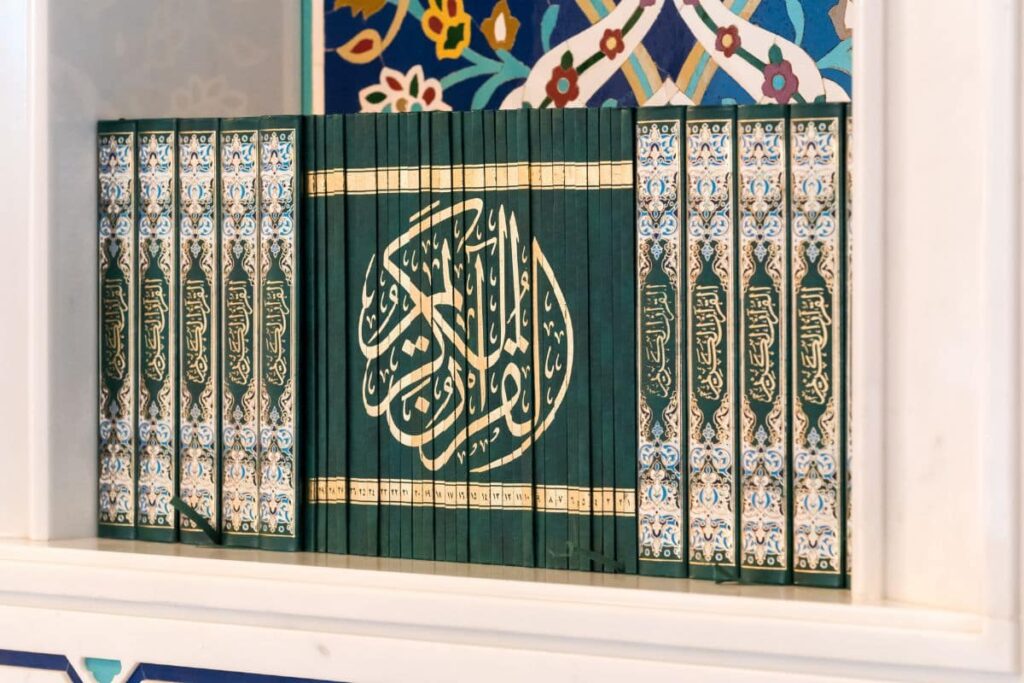
The question here is: what is the purpose of tajweed? Linguistically, Tajweed denotes “proficiency” or “doing something well.” When it comes to the Qur’an, it refers to giving each letter of the text its appropriate rights and qualities when we recite it, and according to the principles that apply to those letters in various contexts.
By monitoring the fundamental qualities of every letter that never leaves it, we provide the letters with their rights. And we give them their due by looking at the traits of each letter that are present in them occasionally and absent at other times.
Therefore, it is our responsibility to follow those guidelines in order to repeat it as it was given.
- Maintaining Original Pronunciation: Tajweed makes sure that every letter has its proper qualities (Sifaat al-Huruf) and is generated from its correct articulation position (Makharij al-Huruf).
- Preventing Meaning Changes: Arabic is a precise language; thus, even little changes in sound can drastically alter a word’s meaning. For instance, a verse’s meaning might be altered by misunderstanding similar letters like ص (Saad) and س (Seen).
- Enhancing the Beauty of Recitation: In addition to correctness, Tajweed offers a melodic and rhythmic framework that enhances the recitation and promotes reading it carefully (Tarteel) as opposed to quickly.
- Adhering to the Sunnah enables Muslims to imitate the Prophet Muhammad’s exact, lucid, and metered recitation.
- Spiritual Connection: Careful pronunciation promotes contemplation of the words’ meaning, transforming recitation into a more profound act of devotion.
Types of Errors Prevented:
- Clear Mistakes (Lahn al-Jaliyy): Serious mistakes that are regarded as sinful since they change the meaning or grammar (e.g., a vowel).
- Hidden Mistakes (Lahn al-Khafiyy): Small pronunciation faults (such as shortening a vowel) that lessen attractiveness without necessarily altering meaning.
How to Use Tajweed:
In order to preserve the original and know what is the purpose of tajweed well, rhythmic cadence, it includes guidelines for letter articulation, correct elongation (Madd), nasalization (Ghunnah), and pausing/starting (Waqf).
The Significance of Tajweed for All Muslims

The following explains what is the purpose of Tajweed and the significance of Tajweed, emphasizing how it keeps words from altering their meaning:
- Prevents Words from Changing Their Meaning
Tajweed’s main goal is to prevent the heavenly word from being distorted. Tajweed offers the required guidelines for accuracy because the Quran was revealed in Arabic, a language where minute variations in tone or articulation can drastically affect meaning.
- Letter Confusion (Makharij): Arabic contains letters with similar sounds but distinct articulation points. For instance, the word “Sabr” (patience) might become a completely different term if the letters س “Seen” (light “s”) and ص “Saad” (heavy “s”) are confused.
- Vowel Length and Structure (Madd): A word’s meaning can be altered by incorrectly extending or shortening a sound (madd).
- Case Example (Mispronunciation): Mispronouncing Qalb (heart) as Kalb (dog) owing to incorrect articulation of the “q” and “k” sounds is a frequent yet crucial error. Another example is mispronouncing “Maliki” (Master of the Day of Judgment) to imply “Owner” rather than “King” in Surah Al-Fatiha, or modifying a letter to make “disobeyed” seem like a declaration of unbelief.
- Inaccurate Pauses (Waqf): A verse’s intended context might be drastically altered by stopping at the incorrect point, changing a command into a prohibition or vice versa.
- Additional Important Causes of Tajweed
- Following the Sunnah: Since Prophet Muhammad ﷺ was instructed to recite the Quran with Tarteel (slow, measured recitation), Muslims are able to repeat it in the same manner as it was revealed to him.
- Enhancing Beauty and Spirituality: When Tajweed is performed correctly, the recitation becomes melodious and harmonic, which promotes concentration (Khushu’) during prayer and strengthens the spiritual experience.
- Huge benefits: The skilled will be in the company of angels, while those who struggle but make an effort to learn and read with Tajweed will receive double benefits.
- Better Memorization (Hifz): Accurate memorization and long-term retention of verses are facilitated by correcting pronunciation.
Many students find it beneficial to concentrate on one rule at a time with a skilled teacher or through guided internet resources in order to begin implementing these principles, like Itqan Academy. Do you want me to give you a quick, detailed tutorial on what is the purpose of Tajweed and learning the fundamentals of Tajweed?
How to Easily Learn Tajweed
- Start with the Basics: Start by memorizing the Arabic alphabet’s appropriate articulation points (Makharij) and letter properties (Sifaat).
- Locate a Skilled Instructor: Enroll in one-on-one lessons with teachers accredited by Ijazah who can offer tailored advice.
- Go Slow: Instead of overdoing it, concentrate on one rule at a time (e.g., Noon Sakinah, Qalqalah, Madd).
- Listen and Repeat: You may train your ear by listening to well-known Qaris every day, such as Husary or Minshawi.
- Make Use of Tools. For visual assistance, use applications like Learn Quran Tajwid and color-coded Qurans.
- Make a recording of yourself: To monitor your progress, record your recitation and email it to your teacher for comments.
- Daily Consistency: Long, infrequent sessions are less beneficial than even ten to fifteen minutes of daily practice.
Conclusion About What is The Purpose of Tajweed
Muslims are better able to appreciate the elegance and accuracy of Quran recitation when they comprehend the objective of tajweed. Muslims can preserve the meaning of the Quran, repeat it correctly, and deepen their spiritual bond with Allah’s teachings by mastering tajweed.
Are you prepared to get better at reciting the Quran? Enroll in our online Tajweed courses at Itqan Academy to learn from knowledgeable instructors step-by-step. Begin your journey now and recite the Quran in the comfort of your own home with assurance, precision, and beauty.