
Advanced Tajweed rules, which emphasize exact articulation (Makharij), complex letter features (Sifat), sophisticated merging (Idgham), and particular elongation (Madd) norms, enhance Quranic recitation beyond the fundamentals. These guidelines address the complex, required use of Ghunnah, heavy and light letters, and certain halting methods (Waqf) for proficiency.
Advanced Tajweed Rules
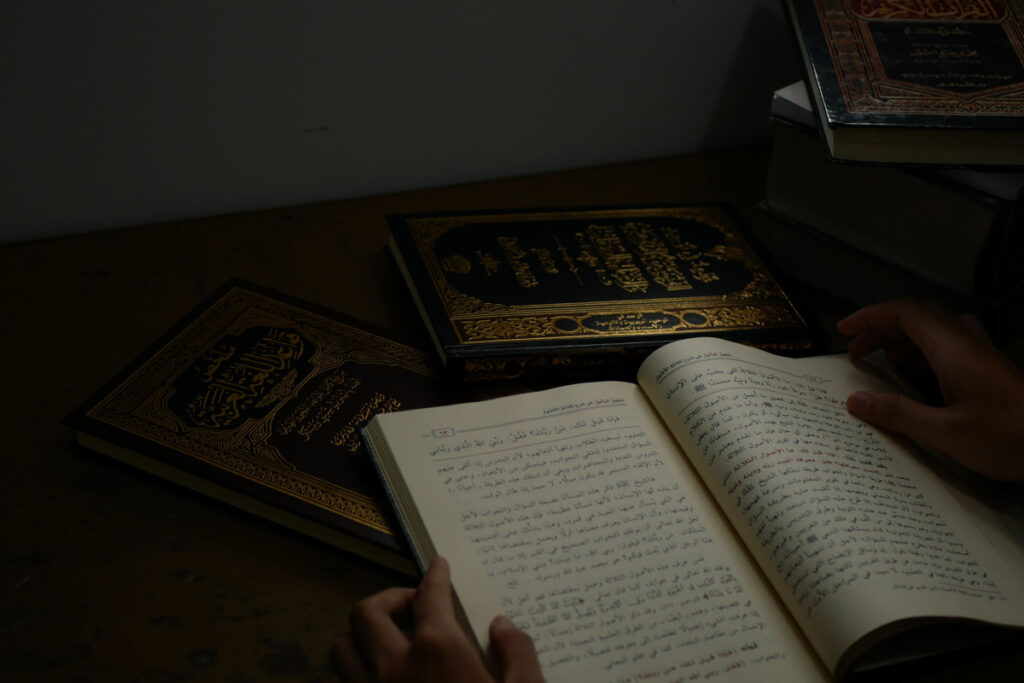
It takes more than just accurate reading to recite the Quran flawlessly; it’s a skill that reaches your spirit and strengthens your bond with its meanings. You will be guided to a new level of recitation in advanced Tajweed rules, where you will learn sophisticated techniques that will enable you to comprehend the points of articulation and their traits.
Developing Your Recitation Skills: Advanced Tajweed Instruction for Real Quranic Reading
Experience the significant effects that meticulous recitation may have on your everyday life and spirituality as you immerse yourself in the rhythm and melody of Quranic words and have a thorough understanding of Tajweed regulations.
Let’s say you want to recite the poems with mastery and quality, avoid frequent errors, and enhance your pronunciation. If so, Advanced Tajweed Lessons are your key to a unique and flawless recitation that makes the Quran appear attractive and clear in your heart.
Learning Tajweed is an art form, not merely a talent, in the lovely journey of Quranic recitation. Whether you’re an experienced reciter looking to improve your technique or a novice anxious to start this spiritual journey, each verse has profound meaning, and delivering it with accuracy changes the tone and the very substance of the words.
The Significance of Advanced Tajweed Rules for Precise Quran Recitation
Because advanced Tajweed rules guarantee the exact pronunciation (Makharij and Sifat) of each letter, maintaining the purity of the divine message, it is essential for accurate Quran recitation.
It avoids both little (Lahn Khafi) and large (Lahn Jali) faults that might skew interpretations. Further education also strengthens spiritual ties and improves the aesthetic beauty of recitation.
- Preserving Meaning: Advanced Tajweed ensures that the Quran is read as revealed by preventing subtle faults that might change the meaning of passages, such as improper vowel length or incorrect articulation points.
- Preventing Errors (Lahn): It assists reciters in avoiding both significant mistakes that change the meaning and little mistakes about correct pronunciation, including omitting (nasalization).
- Mastering Articulation (Makharij & Sifat): For non-native speakers, mastering the exact points of articulation and features of each Arabic letter (such as Qaf or Eyin) is crucial.
- Enhancing Recitation Skills: To accomplish a smooth and flawless recitation, it teaches sophisticated rules, including mergers, elongations, and thickening/thinning.
- Spiritual Connection: A deeper, more emotional connection with the Quran is made possible by mastering advanced Tajweed, which improves the recitation’s beauty and rhythm.
- Regard for the Text: By making sure that Allah’s words are repeated with the utmost care and precision, it shows the utmost regard for them.
Advanced Madd (Elongation) Types
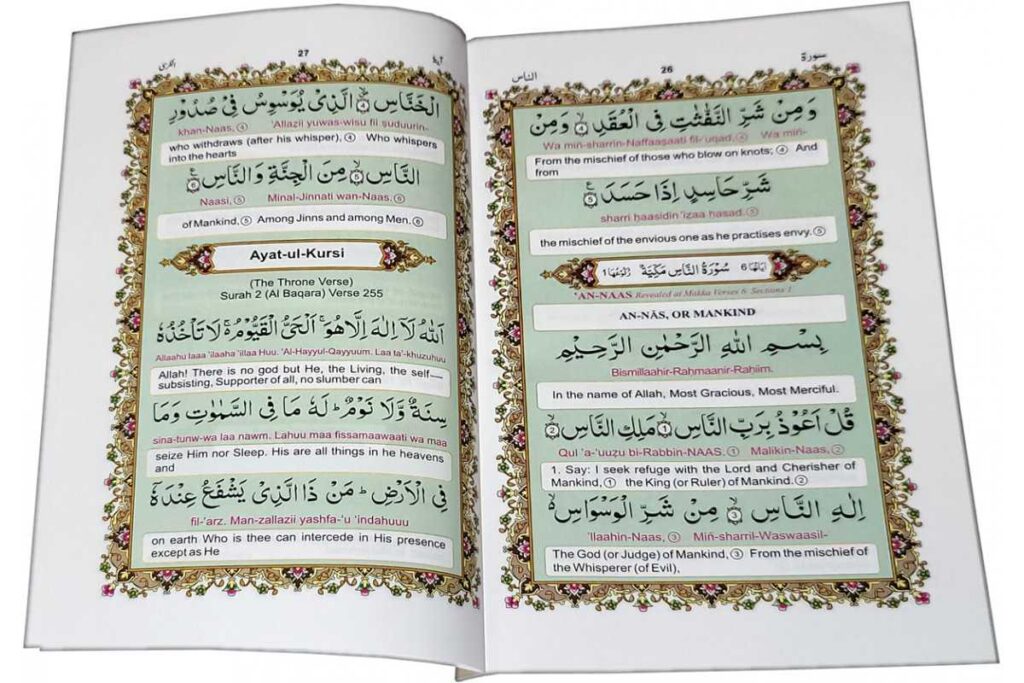
- Madd Lāzim (Obligatory – 6 Harakat): This happens when a permanent Sukoon or Shaddah comes after a Madd letter.
- Kalimi (word-based): Mukhaffaf (light, with Sukoon, for instance, آلْآنَ) or Muthaqqal (heavy, with Shaddah الضَّالِّينَ).
- Harfi (Letter-based): Found in Surahs’ first letters, such as Alif-Laam-Meem.
- Madd Muttasil (Connected – 4-5 Harakat): A word that has both the Hamza (ء) and the madd letter (For instance, سَوَآءٌ).
- Madd Munfasil (Separated – 4-5 Harakat): The Hamza (ء) appears at the beginning of the following word, while the madd letter appears at the end of the previous one (For instance, بِمَآ أُنزِلَ).
- Madd ‘Aaridh Li-Sukun (Temporary – 2, 4, or 6 Harakat): When a poem ends, a madd letter is followed by a temporary Sukoon.
- Madd Leen (Soft – 2, 4, or 6 Harakat): A Yaa or Waw preceded by a Fathah, followed by a brief Sukoon while pausing (For instance, خَوْفٍ, بَيْتٍ).
- Madd Badal (Substitute – 2 Harakat): Usually, in place of a doubled hamza, the Hamza comes before the Madd letter (For instance,آمنوا).
These kinds of advanced Tajweed rules are essential to preserving the proper meaning and beauty of reciting the Quran.
Advanced Tarqeeq and Tafkheem Rules
Advanced Tafkheem (heavy) and Tarqeeq (light) rules concentrate on conditional letters (Ra, Lam in Allah, Alif), different thickness levels dependent on vowel sounds, and the seven permanent Isti’laa letters (خ، ص، ض، غ، ط، ق، ظ).
The “Lam” in the name Allah, certain rules for Ra’ (ر), and the impact of neighboring letters on sound quality are important examples of advanced Tajweed rules.
- Isti’laa, the Seven Permanent Heavy Letters
Because the rear of the tongue is raised in the direction of the soft palate, these seven letters are always thick (Tafkheem): خ (Khaa), ص (Saad), ض (Daad), غ (Ghayn), ط (Taa), ق (Qaaf), ظ (Dhaa).
Strength Levels: The vowel determines the degree of thickness, which is highest with Fatha+Alif (For instance, طَـالَ), followed by Fatha (طَ), Dammah (طُ), and Kasra (طِ).
- Advanced Guidelines for the Ra’ (ر) Letter
Ra’ is a complicated letter that alternates between light and heavy:
Always Heavy (Tafkheem): If the Ra’ has a Dammah رُ or Fatha رَ.
If a Fatha or Dammah comes before the Ra’ (Saakin) (For instance, وَأَرْسَلَ).
If the Ra’ is Saakin, a Kasra comes before it, but a heavy letter (Isti’laa) comes after it in the same word (For instance, مِرْصَادًا).
If the Ra’ has a Kasra رِ, it is always light (Tarqeeq).
If the Ra’ is Saakin and is followed by a permanent Kasra (For instance, فِرْعَوْنَ). If the Ra’ is Saakin because of pausing (Waqf) and is preceded by a Ya’ Saakinah (For instance, خَبِيرٌ). Optional (Jawaz Al-Wajhayn): Tafkheem is frequently favored when Ra’ is Saakin, preceded by a Kasra, and followed by an Isti’laa letter that is Kasra-voweled (For instance, فِرْقٍ).
- Advanced Lam (ل) Rules
Generally Light (Tarqeeq): Except for the word “majesty,” all Laam letters are light.
Heavy in Allah (الله)): The Laam in “Allah” is heavy if it comes before a Dammah (For instance, عَبْدُ اللَّهِ) or a Fatha (For instance, قُلْ هُوَ اللَّهُ).
Light in Allah (Allah): The Laam in “Allah” is light if it comes before a Kasra (For instance, بِسْمِ اللَّهِ).
- Advanced Alif (ا) Rules
The Alif (Alif Madd) comes after the letter that comes before it; it is light if it comes before a light letter (For instance, كَانَ) and heavy if it comes before a heavy letter (For instance, قَالَ).
- Typical Mistakes in Advanced Tafkheem
When pronouncing heavy letters (such as Saada or Daad), avoid making the typical error of rounding your lips.
When performing Tarqeeq on a letter that comes after a heavy letter, avoid “Imalah” (tilting the sound towards an ‘e’ sound).
Note: The tongue position—raised (Tafkheem) vs flat/lowered (Tarqeeq)—is the main distinction.
Learn the art of reciting the Quran under professional direction. Enroll in Itqan Academy now to study advanced Tajweed rules step-by-step from knowledgeable instructors who will assist you in accurately and confidently reciting the Quran.