
Similar to how Laylat Al-Qadr, the Night of Empowering Decree in Ramadan, is the holiest night of the Islamic year, the Day of Arafah importance (Yawm Al-‘Arafah), Yawm Al-Waqf, also known as the Day of the Standing, is significant because it is the most sacred day in the Islamic Hijri lunar year.
Day of Arafah importance
The Day of Arafah importance in the Hajj, when pilgrims congregate to worship and beg their Lord on the mountain plain of Arafah.
The pilgrims congregate at the mountain plain of Arafah on the ninth day of Dhul-Hijjah, known as the Day of Arafah, to pray and make requests to their Lord. Indeed, according to one hadith, “Hajj is Arafah” (Abu Dawud). Thus, Arafah is the essence of the Hajj.
Another reason the day of Arafah is important is that this wonderful ayah was revealed on that day:
On this day, I have finished my favor upon you, finalized your faith, and approved Islam as a religion for you.” (Surah al Maa’idah 5:3)
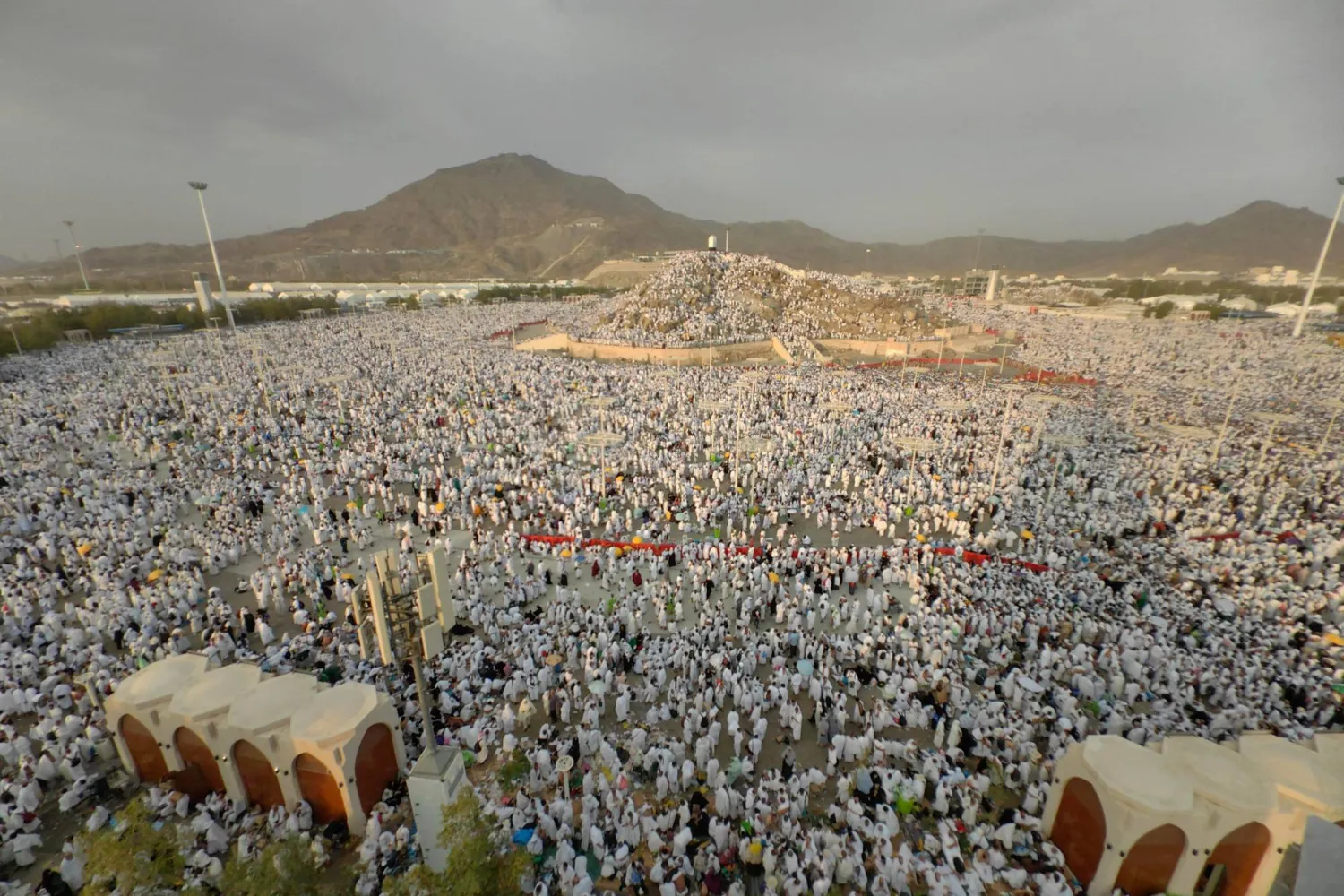
What Is Arafah, and Where Is It?
About 20 kilometers southeast of Makkah sits Mount Arafat, often called the Mountain of Mercy. Prophet Ibrahim (AS) prepared to sacrifice his son here, and Hajj pilgrims congregate here for the crucial rite of wuqūf, or standing before Allah, when they humble themselves in vigil, make du’a, and ask for pardon.
“Arafah is Hajj.” Hadith, Abu Dawood
Even for individuals who do not do the Hajj, the day is extremely valuable and rewarding. Muslims around are urged to commemorate it with devotion, introspection, fasting, and almsgiving.
Which qualities are unique to the Day of Arafah importance?
It is the day that God made Islam flawless.
On this day, God completed His favor for humanity and the Muslims.
On this day, God said that Al-Islam, or the Peace, will be the religion of believers till the end of time since He was pleased with it.
According to Sûrat Al-Mâ’idah (5:3), it is the day that God revealed these three Islamic qualities to His Prophet, God’s blessing and peace upon him.
It is the day of the Prophet’s Farewell Pilgrimage (Ḥajj Al-Wada’) and his renowned Farewell Address (Khutbah Al-Wadâ’) to all believers until the end of time, on him be peace. The revelation mentioned earlier occurred on a Friday, the Muslim weekly communal day of Congregational Prayer (Jumu‘ah).
On this day, the Prophet (peace be upon him) testified before God and the believers three times that he had fulfilled the divine duty of His messengership, which was to spread Islam and the Quran to humanity.
Arafat Mountain
In light of talking about Day of Arafah importance, we should mention to mount Arafat, which rises to a height of around 70 meters above sea level, is about 20 kilometers outside of Mecca. This makes it the highest peak in the middle of the Arafah plain. The significance of Mount Arafat has only increased due to its height; it has seen a wide range of events and even served as the location of some noteworthy occurrences. When Muslims consider or travel to the mountain, they might consider how many other Muslims have gazed at Mount Arafat throughout the ages and how many significant events have occurred on or around it.
What took place in Mount Arafat?
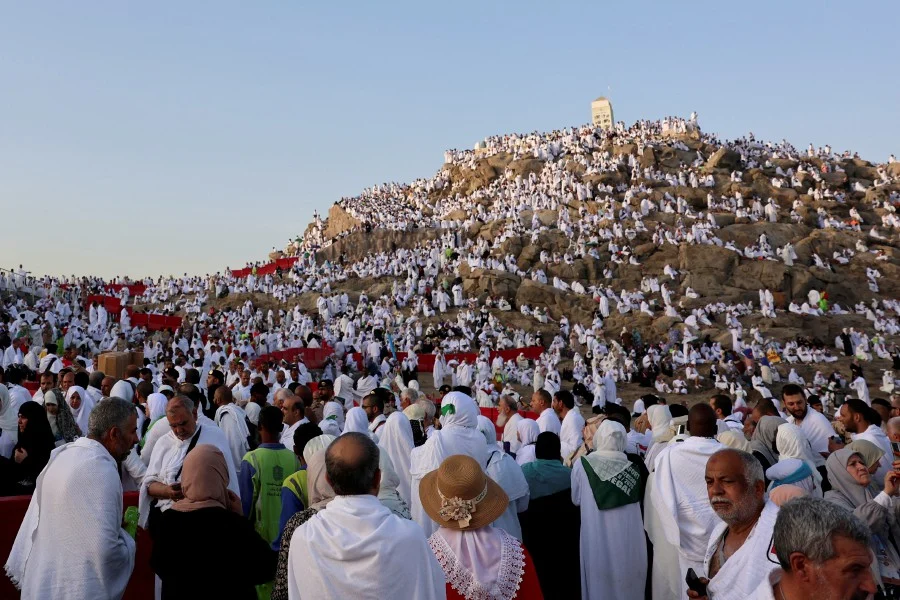
The greatest sacrifice made by the Prophet Ibrahim (AS) is remembered on the Day of Arafah. Ibrahim carried his son, Ismail (AS), to the summit of Mount Arafat when Allah (SWT) instructed him to sacrifice him.
Allah (SWT) proclaimed that Ismail (AS) had completed his mission as Ibrahim (AS) prepared to sacrifice his son, and Ismail (AS) prepared to devote his life in obedience and faith in God. Ibrahim was given a white-horned ram by Allah (SWT), which was offered as a sacrifice instead of his son.
Because Ibrahim (AS) was prepared to give up the most valuable item in his life on this day in the sake of Allah (SWT), the Day of Arafah holds great significance. It was evident to Allah (SWT) that Ibrahim (AS) would do anything for him.
Every Muslim should strive to conduct their life in this manner. Ibrahim and Ismail were saved from the sacrifice because of their unwavering faith and loyalty. Because of this incident, Mount Arafat is known as “The Mountain of Mercy.”
In fact, Mount Arafat is a very significant place in the Qur’an and is not just the site of the ultimate sacrifice.
For instance, it is believed that Allah (SWT) pardoned Adam’s (AS) first transgression, which led to his descent from heaven on Mount Arafat. Additionally, the concept of asking for a spouse atop the mountain is influenced by the fact that Adam (AS) and Hawa rejoined here following their respective expulsions from paradise.
In the same vein, it is thought that the Prophet Muhammad (SAW) gave his parting speech to those who accompanied him on the pilgrimage at Mount Arafat. Each of these factors contributes to Mount Arafat’s high prominence in the Qur’an.
Is it required to fast on the Day of ‘Arafah?
All madhabs (schools of thought) agree that while fasting on the Day of ‘Arafah is not required, it is strongly advised for those who are not undertaking the Hajj.
Fasting on the Day of ‘Arafah, when Allah likes to pardon his followers, is a sunnah of the Prophet Muhammad (PBUH).
Muslims can reap the benefits of fasting on the Day of ‘Arafah for the whole year.
Lastly, about Day of Arafah importance, remember to do tasbih and remember Allah during the final hour before sunset, when it is advised to ask the Almighty Subhana wa Ta’ala for forgiveness. Reciting Du’a Al-Asharat is strongly advised.
Recall that this may be our final Arafah Day. Next year, insha’Allah, let’s beg Allah Subhana wa Ta’ala to grant tawfiq to those who are invited to his holy place to undertake the Hajj. May all of your actions be accepted by Allah Subhana wa Ta’ala. Itqan Academy hopes for a Happy Eid al-Adha for all Muslims.