
Do you know the virtues of Dhul Hijjah? One of the four holy months and one of the most important in the Islamic calendar is Dhu al Hijjah.
Muslims have a particular place in their hearts for this month because of its many benefits and auspicious days.
However, what exactly is Dhul-Hijjah? What are its virtues? And how can we do good deeds to make the most of this auspicious month?
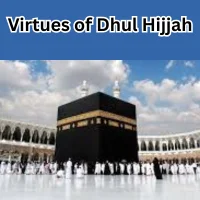
Virtues of Dhul Hijjah
In many ways, it’s even more full of opportunity to benefit and accomplish a full roster of deeds through greater dhikr, charity, prayer, and good works, although its benefits are not as well known as those of Ramadan.
The virtues of Dhul Hijjah are a lot. The first ten days of this month are dedicated to devotion, according to the Prophet Muhammad ﷺ. For those making the journey, preparations are being made throughout these days. This is a unique moment to remember God and dedicate more time to prayer and good acts for those who are not traveling for the pilgrimage.
The first ten days of Dhul Hijjah are significant because they offer a chance to truly repent, get closer to God, and combine acts of worship in a way that is not possible at any other period of the year. Join us every day this year to uncover a strategy to maximize these priceless days spent at home and to learn more about the benefits of Dhul Hijjah.
What You Should Do During Dhul Hijjah’s 9 Days To Benefit from the Virtues of Dhul Hijjah
By stating that there is no day larger and more dear to Allah than these ten days of Zulhijjah, Prophet Muhammad s.a.w. has emphasized the virtues of Dhul Hijjah, the importance and excellence of the days. The following 9 actions can help you get the greatest benefits during these auspicious times:
-
Discover the virtues of Dhul Hijjah
Seeking knowledge is a kind of worship that boosts your taqwa and inspires you to do good. “Whoever travels a path in search of knowledge, Allah will make easy for him a path to Paradise,” declared the Prophet ﷺ.
Learn about the significance of Dhul Hijjah, its relationship to sacrifice, and the value of prayer and duʿa during these days to begin this month. Check out some of our Dhul Hijjah resources to get started.
-
Fast, particularly on ʿArafah (the ninth day of Dhul Hijjah)
The best approach to acquire taqwa and maintain spiritual engagement throughout the day is to fast. While fasting on the Day of ʿArafah is customary, it is also sunnah to fast for the first eight days.
Set a suhur alarm for the first nine days of the month this year.
-
Be charitable and assist those in need.
“Whoever gives in charity something equivalent (even) to a date from his honestly earned pure income—for only the pure ascends to Allah—then Allah accepts it with His Right Hand and nurtures it for the person like one of you nurtures his baby horse, until it becomes like a mountain,” stated the Messenger of Allah ﷺ. (Bukhārī)
-
Avoid transgressions and practice tawbah (repentance) and istighfar (asking pardon)
During these ten days, renew your repentance and make a sincere commitment to Allah to cease sinning, beginning with these days.
“Beware of sins, because they deprive one from being forgiven in the seasons of mercy,” stated Ibn Rajab (raḥimahullāh). Acts of obedience bring the slave closer to Allah and His love, while misdeeds push him far away.
In virtuous eras and locations, misdeeds become more serious, and their punishment is commensurate with the virtue of those times and places. (Ibn Taymiyyah (raḥimahullāh))
-
Give the Messenger of Allah salawat
To gain the virtues of Dhul Hijjah, give the Messenger of Allah salawat:
“Those who send the most ṣalāh upon me will be the closest of people on the Day of Judgement,” said the Messenger of Allah ﷺ. (Tirmidhī)
-
Carry out qurbani (udhiyah)
“There is nothing more beloved to Allah that a slave can do on the day of Naḥr than spill blood (i.e., qurbānī),” declared the Prophet ﷺ. It will emerge with its horns, hair, and hooves on the Day of Judgment. Indeed, even before the blood flows on the ground, Allah will accept it, therefore fully enjoy (making the sacrifice). (Tirmidhī)
-
A rise in dhikr (memories)
It is sunnah to recite a lot of tahlil, takbir, and tahmid throughout the first ten days of Dhul Hijjah.
Thus, frequently utter Subhanallah, Alhamdulillah, Allahu Akbar, and La ilaha illa Allah. We can connect with Allah throughout the day when we are in a state of perpetual memory, which serves as a reminder of our mission even in the most routine of chores.
During this time of year, increasing dhikr can also assist those of us at home to feel more connected to the pilgrims doing the Hajj—if not physically, then at least spiritually and materially.
“Whoever prays Fajr in congregation, then sits remembering Allah [i.e., doing dhikr] until sunrise, and then prays two rakʿat [of nawafil], that person has the reward of Hajj and ʿumrah: complete, complete, complete,” said the Prophet ﷺ.
-
Purify your personality
Doing more good is not the only goal these days. They are also related to letting go.
Letting go of our distractions, of what makes the heart dull. of what separates us. These days, the most significant deeds may be those that go unnoticed: choosing patience over impulse, silence over complaining, and sincerity over appearance.
-
Make an emotional connection
Take these days to think, to gain virtues of Dhul Hijjah, ask for forgiveness, and find your purpose again. This is about genuinely getting back to Allah, not merely doing things. Have a close conversation with Allah, understanding that He is both al-Jabbār, the healer of wounded hearts, and al-Samīʿ, the One who always listens.
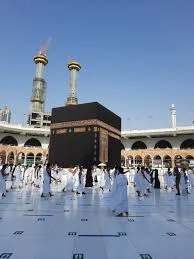
Enjoying Eid
After ending Dhul Hijjah first 10 days and achieving the virtues of Dhul Hijjah, Insha allah, enjoy Eid.
Like Eid Al-Fitr, Eid al-Adha is a celebration of happiness, blessings, and spending time with loved ones. But unlike previous Eids, this one also honors the greatest divine offering in recorded history.
After years of yearning for a child, Prophet Ibrahim consented to sacrifice his beloved son, Ismail (AS), who was only given to him in his old age, in obedience and complete surrender to Allah (SWT).
Allah (SWT) rewarded the son for following His instructions by substituting a ram as a Qurban (sacrifice), leaving his Ismail (AS) uninjured. Prophet Ibrahim (AS) completed the order, which was a test from Allah to His cherished servant.
As with Eid al-Fitr, observe the Eid sunnah. This involves taking ghusl (bath) in the morning, putting on perfume, reciting the Eid prayer, and more.