
Learning How to Perform Wudu is essential for every Muslim who wants to prepare properly for salah (prayer). Wudu, also known as ablution, is an Islamic purification process that involves washing specific parts of the body and wiping others according to the teachings of Prophet Muhammad (peace be upon him). Understanding the correct steps, necessary conditions, and prescribed supplications helps Muslims perform this important act of worship with confidence and spiritual awareness.
For beginners, learning how to make wudu may seem complicated at first, but the process becomes straightforward with regular practice. This guide explains each stage of ablution, the duas to recite before and after completing it, and the common actions that invalidate wudu. By following these instructions, Muslims can learn How to Perform Wudu correctly and incorporate this essential Sunnah practice into their daily routines.
What is Wudu and Why is It Essential in Islam?

Wudu is the Islamic ritual of purification performed before salah. It involves washing specific body parts and wiping the head and ears, preparing Muslims physically and spiritually for worship.
Wudu is essential for salah, as Prophet Muhammad (peace be upon him) stated in Sahih Muslim, “No salah is accepted without wudu.” Performing ablution correctly and reciting the testimony of faith afterward also brings great spiritual rewards, including the opening of the eight gates of Paradise.
At Itqan, we help beginners understand How to Perform Wudu by explaining the correct steps of ablution, its spiritual significance, and the importance of following the Sunnah. Our online religious education services make it easier for learners to practice this essential act of purification with confidence and incorporate it into their daily worship.
Prerequisites and Conditions Before Starting Wudu
Before beginning ablution, Muslims should prepare themselves and ensure that they can complete the required washing and wiping actions correctly. The following considerations help make the process more straightforward:
- Make the intention (Niyyah): Intend in your heart to perform wudu for purification and worship. There is no prescribed sentence that must be spoken aloud to establish this intention.
- Use clean water: Ensure that the water is suitable for purification and can reach the body parts that must be washed.
- Remove barriers to water: If a substance prevents water from reaching the skin or nails, remove it when required.
- Understand the correct sequence: Learn the prescribed order of washing and wiping so that no essential stage is overlooked.
- Prepare for complete washing: Pay attention to areas such as the spaces between the fingers and toes, the elbows, and the ankles to ensure that water reaches all required areas.
At Itqaan, we help beginners learn How to Perform Wudu by explaining the essential conditions of ablution, guiding them through each step, and helping them avoid common mistakes to practice this important act of purification with confidence.
Step-by-Step Wudu Guide (How to Make Ablution in Islam)
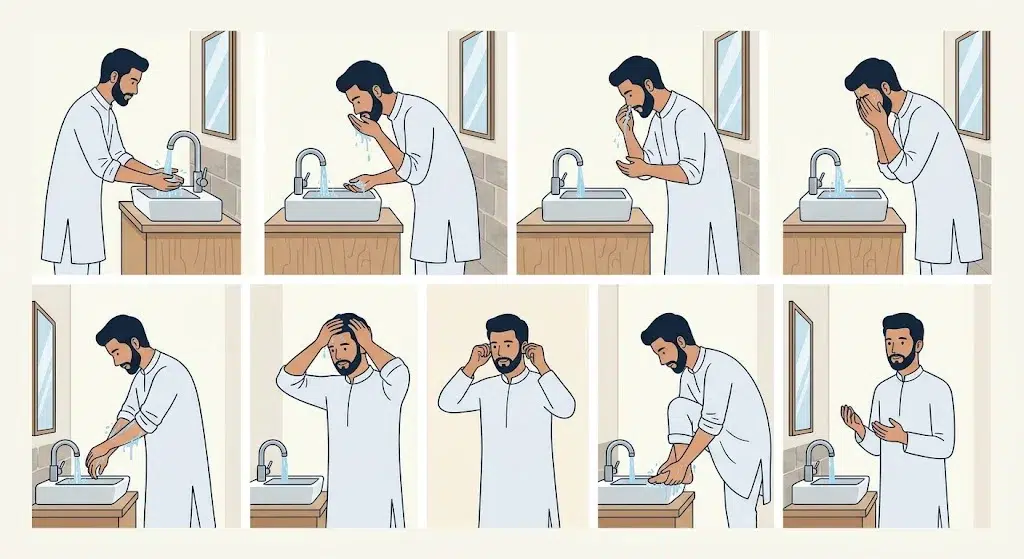
The following instructions explain the commonly taught method of wudu, beginning with intention and ending with the supplications recited after purification. Following the steps in order helps Muslims establish a consistent routine before salah.
Step 1: Intention (Niyyah) and Saying Bismillah
Begin by making the intention in your heart to perform wudu for Allah and prepare for worship. Niyyah is an internal act, so saying it aloud is unnecessary.
Next, say Bismillah (“In the name of Allah”) to begin ablution with His remembrance. This practice is supported by a narration in Sunan Abi Dawud, though scholars differ on its authenticity and ruling. Most consider it recommended, while some regard it as obligatory.
Step 2: Washing the Hands and Rinsing the Mouth & Nose
Wash both hands up to the wrists three times, starting with the right and ensuring water reaches between the fingers. Then rinse your mouth three times, followed by gently drawing water into your nostrils and expelling it three times. Avoid excessive water intake while fasting.
At Itqaan, we help beginners understand How to Perform Wudu correctly by explaining each step of ablution according to the commonly taught Sunnah method, making it easier to learn and practice with confidence.
Step 3: Washing the Face and Forearms up to the Elbows
Wash your entire face three times, from ear to ear and from the hairline to the chin, ensuring all areas are covered. Then wash your right arm, including the elbow, three times, followed by the left arm in the same way.
Step 4: Wiping the Head (Mashh) and Washing the Ears
Wipe your head once with wet hands, moving from the forehead to the back and returning to the front. Then wipe your ears once, using your index fingers to clean the inside and your thumbs to wipe behind them.
Itqaan helps beginners understand How to Perform Wudu by explaining the difference between washing and wiping, making each step of ablution easier to learn and practice correctly.
Step 5: Washing Both Feet up to the Ankles
Wash your right foot three times, including the ankle and between the toes, ensuring all required areas are covered. Repeat with the left foot. Once all washing and wiping steps are complete, your wudu is finished. Recite the prescribed supplication before proceeding to salah.
For additional guidance, Itqaan offers online religious education services that help learners understand Islamic practices, including the correct steps of purification. Such educational support can help beginners build a clearer understanding of How to Perform Wudu and apply the instructions consistently.
Essential Supplications (Duas) Before and After Wudu
The supplications associated with ablution help Muslims combine physical purification with remembrance of Allah. It is important to distinguish between the phrase recited before starting and the established remembrance recited after completing wudu.
| Dua | words | Transliteration | Meaning |
| Dua before wudu | بِسْمِ اللَّهِ | Bismillah | In the name of Allah. |
| Dua after wudu | أَشْهَدُ أَنْ لَا إِلَٰهَ إِلَّا اللَّهُ وَأَشْهَدُ أَنَّ مُحَمَّدًا عَبْدُهُ وَرَسُولُهُ | sh-hadu an la ilaha illallah, wa ash-hadu anna Muhammadan abduhu wa rasuluh. | I bear witness that there is no god worthy of worship except Allah, and I bear witness that Muhammad is His servant and messenger. |
| Another Dua after wudu | اللَّهُمَّ اجْعَلْنِي مِنَ التَّوَّابِينَ وَاجْعَلْنِي مِنَ الْمُتَطَهِّرِينَ | Allahumma-j’alni min at-tawwabin, waj’alni min al-mutatahhirin. | O Allah, make me among those who constantly repent and those who purify themselves. |
What Breaks Wudu? (Common Invalidators of Ablution)
Wudu remains valid until an action occurs that invalidates the state of purification. Understanding these actions is necessary for maintaining the required purification before salah.
Common invalidators of wudu include:
- Natural discharges: Urination, passing stool, and passing gas require a person to renew wudu.
- Falling asleep: Sleep is listed among the actions that invalidate ablution.
- Loss of consciousness: Becoming unconscious also requires purification to be renewed.
- Ejaculation: This is another action identified in the provided guidance as invalidating wudu.
If one of these actions occurs, wudu must be renewed before performing salah. Following the correct purification requirements helps Muslims maintain their readiness for prayer.
There is also a distinction between renewing wudu and performing ghusl. After intercourse, wudu alone is not sufficient for salah; the additional purification known as ghusl is required.
Muslims who wear qualifying socks, shoes, or sandals after establishing valid wudu may wipe over the covered feet when renewing ablution, subject to the applicable conditions and time limits. The provided guidance specifies a period of up to 24 hours or three days for travelers.
Frequently Asked Questions (FAQs)
What is the correct step-by-step process of how to perform Wudu?
To learn how to perform Wudu properly, you begin with the intention and saying “Bismillah,” then wash your hands, rinse your mouth and nose, wash your face, wash your arms up to the elbows, wipe your head and ears, and finally wash your feet up to the ankles.
Is it mandatory to wash each body part three times during wudu?
Washing each body part once is the minimum requirement for a valid wudu, while washing them two or three times follows the Sunnah of the Prophet (PBUH) for completeness.
What actions break or invalidate Wudu in Islam?
Wudu is invalidated by natural discharges (urine, stool, gas), deep sleep, losing consciousness, or direct physical contact accompanied by desire (according to scholarly consensus).
Can beginners easily learn wudu online?
Yes, beginners can easily master wudu and daily Islamic practices through structured guidance, visual guides, and expert-led classes at platforms like Itqan Network.
Conclusion
Learning How to Perform Wudu is an essential step toward performing salah correctly and following the teachings of Prophet Muhammad (peace be upon him). By making the intention, saying Bismillah, washing the required body parts, wiping the head and ears, and reciting the established supplications afterward, Muslims can develop a consistent purification routine.
Understanding the conditions of ablution and the actions that invalidate it is equally important. With regular practice and reliable religious education, beginners can perform wudu with greater confidence, care, and spiritual awareness. Itqaan’s online religious education services can further support learners who want to deepen their understanding of Islamic practices and incorporate them into everyday worship.