
Dua for wudu is an essential part of Islamic purification, reminding Muslims to seek Allah’s blessings while preparing for salah (prayer) and other acts of worship. Alongside washing specific parts of the body, Muslims are encouraged to follow the authentic teachings of Prophet Muhammad (peace be upon him) throughout the ablution process. Learning the correct Dua for Wudu supplications before and after wudu helps Muslims incorporate remembrance of Allah into their daily routine in accordance with the Sunnah.
The dua before wudu is commonly associated with saying Bismillah before beginning, while the supplication after completing ablution includes the testimony of faith. Understanding the Arabic wording, transliteration, English translation, and authenticity of these supplications enables Muslims to practice wudu correctly and appreciate its spiritual significance.
The Spiritual Importance of Dua for Wudu in Daily Worship
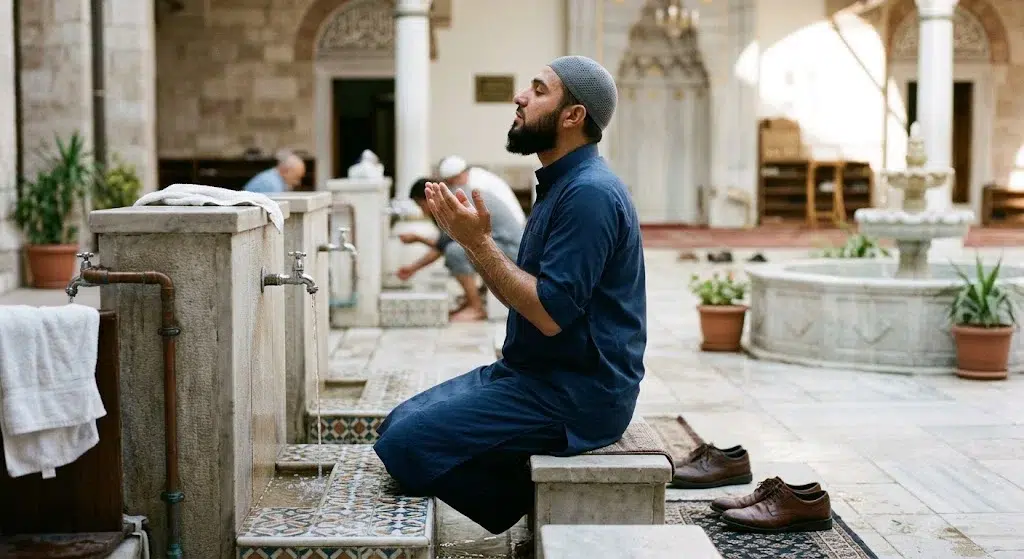
Wudu is an essential act of purification that prepares Muslims for salah by washing specific body parts and wiping the head according to Islamic teachings. Beyond physical cleanliness, it reflects obedience to Allah and spiritual readiness for worship.
Prophet Muhammad (peace be upon him) highlighted its virtues, teaching that those who complete wudu properly and recite the testimony of faith will have the eight gates of Paradise opened for them. Learning the correct method and authentic ablution dua helps Muslims follow the Sunnah and avoid unsupported supplications.
Dua Before Wudu (What to Recite Before Starting Ablution)
Before starting wudu, Muslims are encouraged to say Bismillah (In the name of Allah) to begin this act of worship with remembrance of Him. The dua before ablution is a simple phrase rather than a lengthy supplication. While intention is essential for wudu, it is an act of the heart and does not require specific verbal words.
The Authenticity of Dua Before Ablution (Saying Bismillah)
The phrase commonly recited before beginning wudu is:
بِسْمِ اللَّهِ
“Bismillah.”
“In the name of Allah.”
The recommendation to say Bismillah before wudu is based on a narration reported in Sunan Abi Dawud, whose authenticity and legal implications have been debated by scholars. While some consider it obligatory, the majority regard it as recommended.
Sheikh Abdul Aziz ibn Baz explained that forgetting it or being unaware of the ruling does not invalidate wudu. Therefore, Muslims should say Bismillah before ablution and avoid unsupported supplications. The dua before wudu requires no elaborate wording.
Before Dua for Wudu Proper Step-by-Step Intention and Preparation
Before beginning wudu, a Muslim should prepare to perform the purification with the intention of obeying Allah and becoming ritually clean for worship. In Islam, intention is an act of the heart; there is no prescribed sentence that must be spoken aloud to establish it.
The following preparation before Dua for Wudu helps ensure that ablution is performed correctly:
- Make the intention: Intend in your heart to perform wudu for the purpose of worship and purification.
- Say Bismillah: Begin by mentioning the name of Allah.
- Ensure access to clean water: Use water suitable for purification and make sure it can reach the parts of the body that must be washed.
- Remove barriers to water: If a substance prevents water from reaching the skin or nails, remove it when required.
- Follow the prescribed sequence: Wash the required body parts in the correct order and complete each action carefully.
Dua After Wudu (Supplications Upon Completing Ablution)
After completing ablution, Muslims are encouraged to recite the testimony of faith established in authentic hadith, affirming Allah’s oneness and Prophet Muhammad’s (peace be upon him) prophethood. The dua after wudu is a Sunnah remembrance recited after completing the prescribed washing and wiping actions, rather than during individual steps.
Arabic Text, Transliteration, and English Translation
The following supplication is established in Sahih Muslim and is among the most important remembrances to learn after wudu.
| Arabic text | Transliteration | English translation |
| أَشْهَدُ أَنْ لَا إِلَٰهَ إِلَّا اللَّهُ وَأَشْهَدُ أَنَّ مُحَمَّدًا عَبْدُهُ وَرَسُولُهُ | Ash-hadu an la ilaha illallah, wa ash-hadu anna Muhammadan abduhu wa rasuluh. | I bear witness that there is no god worthy of worship except Allah, and I bear witness that Muhammad is His servant and messenger. |
| اللَّهُمَّ اجْعَلْنِي مِنَ التَّوَّابِينَ وَاجْعَلْنِي مِنَ الْمُتَطَهِّرِينَ | Allahumma-j’alni min at-tawwabin, waj’alni min al-mutatahhirin. | O Allah, make me among those who constantly repent, and make me among those who purify themselves. |
| سُبْحَانَكَ اللَّهُمَّ وَبِحَمْدِكَ، أَسْتَغْفِرُكَ وَأَتُوبُ إِلَيْكَ | Subhanaka Allahumma wa bihamdika, astaghfiruka wa atubu ilayk. | Glory be to You, O Allah, and praise be to You. I seek Your forgiveness and repent to You. |
At Itqan, we help you learn and understand the ablution dua by explaining its Arabic text, pronunciation, and meaning in English, making it easier to recite the supplication correctly and understand its significance in Islamic teachings.
The Great Virtues and Rewards of Reciting Dua After Ablution
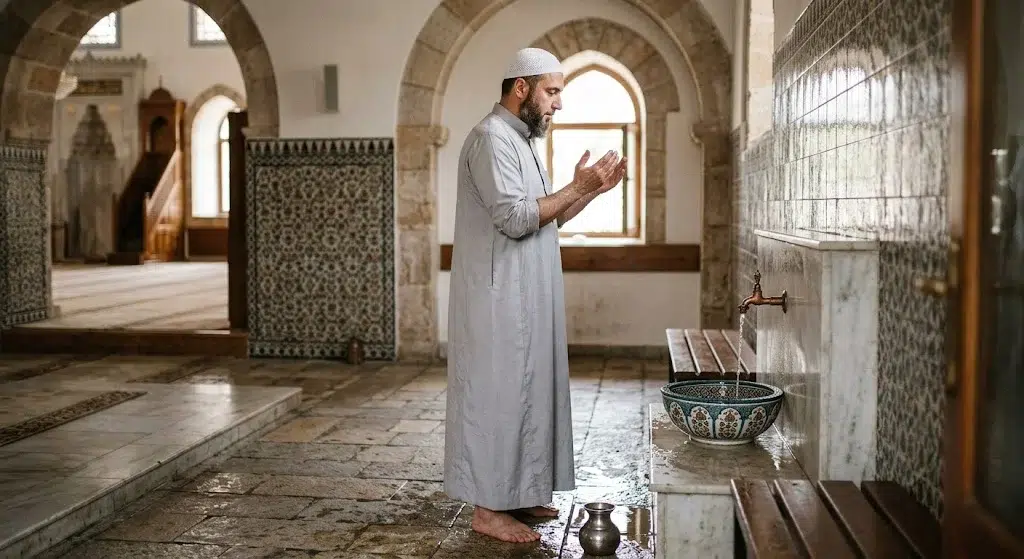
The virtues of completing wudu and reciting Dua for Wudu its prescribed remembrance are established in authentic Islamic teachings. These rewards highlight the connection between purification, faith, repentance, and worship.
- The Gates of Paradise Are Opened: In Sahih Muslim, the Prophet Muhammad (peace be upon him) explained that those who perform wudu properly and recite the testimony of faith afterward will have the eight gates of Paradise opened for them, allowing them to enter through whichever gate they choose.
- Remembering Allah After Worship: Reciting the dua after wudu concludes ablution with remembrance of Allah, reinforcing the importance of combining physical acts of worship with sincere faith.
- Seeking Repentance and Spiritual Purification: Asking Allah to make us among those who repent and purify themselves reflects the desire for both outward cleanliness and inner spiritual growth.
- Following the Sunnah Daily: Learning authentic supplications helps Muslims incorporate the Prophet’s teachings into their daily routines and perform acts of worship in accordance with the Sunnah.
Dua for Wudu IN Sunnah and Steps for Perfect Ablution
Performing wudu correctly involves following the prescribed washing sequence, ensuring water reaches all required areas, and observing authentic Sunnah practices. The following steps outline the commonly taught method of ablution.
Maintaining Purity and Correct Washing Order
- Step 1: Make the Intention and Say Bismillah. Intend in your heart to perform wudu and say Bismillah before beginning.
- Step 2: Wash Both Hands. Wash both hands up to the wrists three times, ensuring water reaches between the fingers.
- Step 3: Rinse the Mouth. Take water into your mouth, rinse thoroughly, and expel it three times.
- Step 4: Clean the Nostrils. Gently draw water into the nostrils and expel it three times, avoiding excessive inhalation, particularly while fasting.
- Step 5: Wash the Face. Wash the entire face from the hairline to the chin and from ear to ear, observing the relevant rulings for washing the beard.
- Step 6: Wash the Arms. Wash the right arm and then the left, including the elbows. The commonly taught Sunnah method involves washing each three times.
- Step 7: Wipe the Head. Wipe the head with wet hands once, following the established Sunnah method.
- Step 8: Wipe the Ears. Wipe the inside and outside of the ears as part of the commonly taught method.
- Step 9: Wash the Feet. Wash both feet up to and including the ankles, paying attention to the areas between the toes to ensure no required area remains dry.
- Step 10: Recite the Dua After Wudu. After completing ablution, recite the established testimony of faith. You may also recite the supplication asking Allah to make you among those who repent and purify themselves.
Maintaining Purity and Correct Washing Order
Maintaining purity requires following the prescribed washing order and distinguishing authentic Sunnah practices from unsupported customs. Although some people recite separate prayers while washing the face, arms, head, or feet, no authentic evidence establishes specific prophetic supplications for each body part.
Muslims should therefore begin wudu by saying Bismillah and recite the established remembrance after completing ablution, avoiding unverified supplications and following reliable Islamic teachings.
At Itqaan, we help you learn and understand the dua before wudu and the dua after wudu, enabling you to combine proper purification with meaningful remembrance of Allah. Through our religious education services, you can understand the authentic supplications, learn the correct steps of ablution, and incorporate these essential Sunnah practices into your daily routine with greater confidence and spiritual awareness.
FAQs About Dua For Wudu
What is the correct dua before wudu / dua before ablution?
When performing a dua before wudu, it is Sunnah to simply say “Bismillah” (In the Name of Allah) before beginning the ablution process.
What is the authentic dua after wudu (ablution dua)?
The authentic dua after wudu is: “Ashhadu an la ilaha illallahu wahdahu la sharika lah, wa ashhadu anna Muhammadan abduhu wa Rasuluh” (I bear witness that there is no god but Allah alone, without partner, and I bear witness that Muhammad is His slave and Messenger).
Are there additional supplications recommended in any dua after ablution?
Yes, after the Shahada, it is also recommended to say: “Allahumma-j’alni minat-tawwabina waj’alni minal-mutatahhirin” (O Allah, make me among those who repent and make me among those who purify themselves).
How does proper Dua for Wudu enhance a Muslim’s daily worship?
Performing wudu correctly with its prescribed duas washes away minor sins, prepares the believer physically and spiritually for prayer, and elevates their daily connection with Allah.