
Bathroom dua is an essential part of Islamic etiquette, reflecting the importance of cleanliness, spiritual awareness, and following the Sunnah of Prophet Muhammad (peace and blessings be upon him).
Muslims recite a supplication before entering the toilet to seek Allah’s protection from evil and say another after leaving to ask for forgiveness.
Understanding the words and meaning of each supplication helps Muslims practice these teachings with confidence. By learning when to recite each dua and following the associated etiquette, believers can establish simple daily habits that strengthen their connection with Allah.
The Importance of Adab (Islamic Etiquette) in Daily Life
Adab refers to the manners and conduct encouraged by Islamic teachings, including personal hygiene, modesty, and bathroom etiquette. Islam emphasizes cleanliness and ritual purity, both essential for daily life and prayer.
The dua entering the toilet seeks Allah’s protection from evil, while the supplication recited after leaving asks for forgiveness. Together, these practices reflect the Sunnah of Prophet Muhammad (peace and blessings be upon him) and help Muslims incorporate spiritual awareness into their everyday routines.
Dua Before Entering the Bathroom (Entering the Toilet)
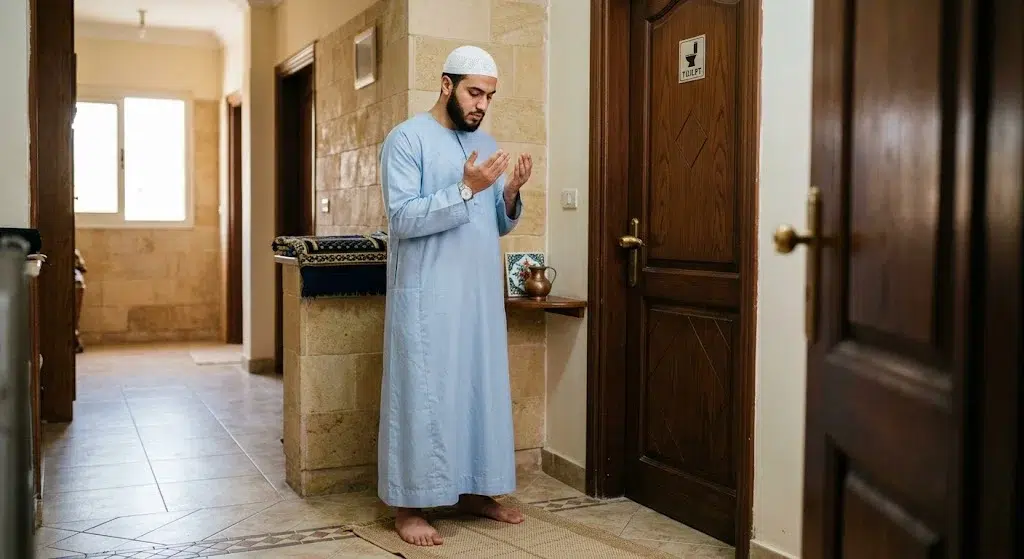
The Sunnah encourages Muslims to seek Allah’s protection before entering the bathroom. The dua entering the toilet is a brief supplication established in authentic hadith, reflecting the believer’s reliance on Allah and the importance of following the guidance of Prophet Muhammad (peace and blessings be upon him) in everyday life.
Arabic Text, Transliteration, and English Translation
The commonly recited dua entering the toilet is presented below.
اللَّهُمَّ إِنِّي أَعُوذُ بِكَ مِنَ الْخُبُثِ وَالْخَبَائِثِ
“Allahumma inni a’udhu bika minal-khubthi wal-khaba’ith.”
“O Allah, I seek refuge in You from the male and female devils.”
Why We Say Dua Before Entering the Bathroom
The bathroom dua reflects the Sunnah of Prophet Muhammad (peace and blessings be upon him), seeking Allah’s protection from evil before entering the toilet.
- Seeking protection: Acknowledges the believer’s dependence on Allah for protection from evil and harm.
- Following the Sunnah: Encourages Muslims to follow the Prophet’s guidance in everyday activities.
- Developing mindfulness: Establishes a consistent habit of remembering Allah throughout daily life.
- Observing Islamic etiquette: Emphasizes reciting the supplication before entering the bathroom, rather than while relieving oneself.
Dua After Toilet and Leaving (Ghufranak)
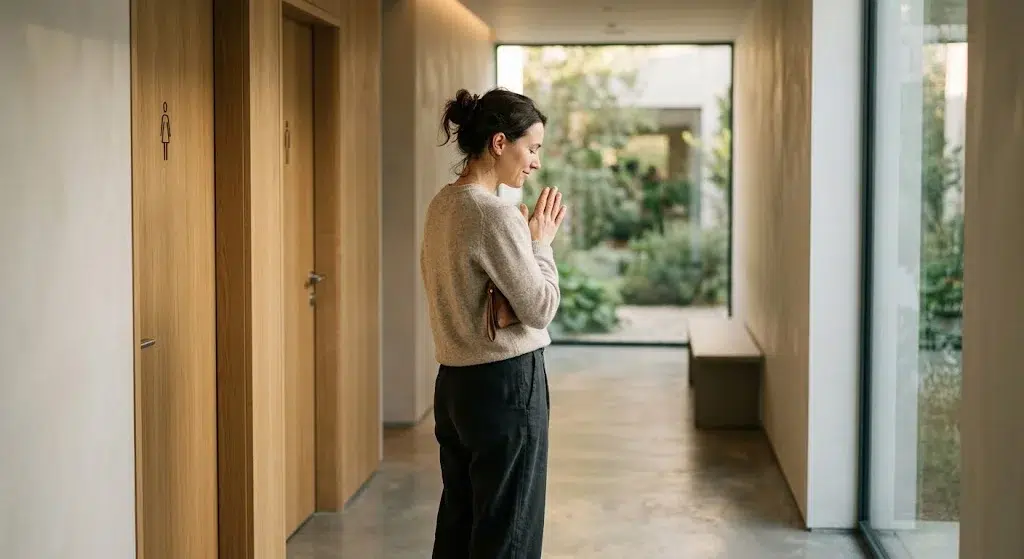
After leaving the bathroom, the Sunnah recommends saying Ghufranak, a brief supplication asking Allah for forgiveness. The dua after toilet differs from the entry supplication, as it expresses gratitude and a request for forgiveness. This practice is reported from Aishah (may Allah be pleased with her) in Sunan Abi Dawud and Jami’ at-Tirmidhi.
Understanding the Meaning of “Ghufranak”
The Arabic word Ghufranak (غُفْرَانَكَ) means “I ask You for forgiveness.” This brief supplication is commonly understood as a reminder of Allah’s blessings, including nourishment and bodily relief, and the importance of gratitude and seeking forgiveness for personal shortcomings. Although this wisdom is a scholarly interpretation rather than an explicit explanation in the hadith, the after bathroom dua remains an easy-to-memorize Sunnah that Muslims can incorporate into their daily routines.
Dua when Leaving the Toilet: Transliteration and English Meaning
The authentic, well-known dua after toilet is simple and does not require a lengthy formula.
غُفْرَانَكَ
“Ghufranaka.”
”I ask You for Your forgiveness.”
Sunnah Etiquette for Using the Bathroom in Islam
Islamic bathroom etiquette combines spiritual remembrance with practical measures for cleanliness, modesty, and personal hygiene. The supplications are an important part of this guidance, but they are not the only practices associated with using the toilet.
Muslims are encouraged to follow the established Sunnah where applicable, avoid unnecessary hardship, and maintain cleanliness in ways consistent with Islamic teachings.
Stepping in with the Left Foot and Out with the Right
Islamic bathroom etiquette recommends entering with the left foot and exiting with the right, following the broader Sunnah concerning the use of the right and left sides.
The recommended sequence is simple:
- Before entering: Recite the bathroom dua outside the doorway.
- Entering: Step in with the left foot.
- While inside: Maintain privacy and observe proper hygiene.
- Leaving: Step out with the right foot.
- After leaving: Say Ghufranak to ask Allah for forgiveness.
Maintaining Hygiene and Purity (Taharah)
Taharah refers to physical cleanliness and ritual purity, both essential aspects of Islamic practice, particularly for performing salah. Islamic bathroom etiquette includes several important principles:
- Cleanse thoroughly: Remove impurities after relieving yourself, using water or other permissible methods where appropriate.
- Use the left hand: The Sunnah instructs Muslims to avoid cleaning themselves with the right hand, as reported in Sahih al-Bukhari.
- Wash your hands: Clean your hands thoroughly after using the toilet to maintain personal hygiene.
- Observe modesty: Protect your privacy and avoid unnecessary exposure.
- Avoid unnecessary speech: Refrain from unnecessary conversation while relieving yourself and observe the relevant Islamic etiquette.
- Respect the Qiblah: Avoid facing or turning your back toward the Qiblah when relieving yourself outdoors, in accordance with the relevant hadith and scholarly rulings.
- Conserve water: Use sufficient water for cleanliness without unnecessary waste.
The bathroom dua complements these hygiene practices by integrating spiritual remembrance with personal cleanliness. Reciting the supplications before entering and after leaving helps Muslims follow the Sunnah while maintaining modesty, purity, and awareness of Allah in their daily lives.
FAQ About Bathroom Dua
What is the correct dua before entering the bathroom?
When making a dua before entering the bathroom (or dua entering the toilet), it is Sunnah to say: “Bismillah. Allahumma inni a’oodhu bika minal-khubthi wal-khabaa’ith” (In the name of Allah. O Allah, I seek refuge in You from the male and female impure spirits).
What is the after bathroom dua / dua after toilet?
The correct after bathroom dua or dua after toilet is simply saying: “Ghufranak” (I ask You [Allah] for Your forgiveness).
How do you pronounce “Ghufranak” (leaving toilet dua in english)?
For the dua when leaving the toilet transliteration and pronunciation, it is pronounced as “Ghu-fra-nak”, which translates to “I seek Your forgiveness.”
Which foot should you step with when entering and leaving the toilet?
According to the Sunnah, a Muslim should enter the bathroom with the left foot and exit with the right foot, combining physical cleanliness with spiritual remembrance.
Conclusion
The bathroom dua is a meaningful part of Islamic daily life, reflecting the Sunnah of seeking Allah’s protection before entering the toilet and asking for forgiveness after leaving. By learning the supplications, understanding their meanings, and observing proper bathroom etiquette, Muslims can incorporate these practices into their routines while maintaining cleanliness, modesty, and spiritual awareness. These simple acts reinforce the importance of following the Sunnah and remembering Allah in everyday life.