
Noorani Qaida vs Tajweed is an important distinction for anyone beginning to learn how to read the Quran accurately. While both support proper Quran education, they serve different purposes. Understanding these differences can help beginners choose the right learning path for their current reading level and goals.
Noorani Qaida builds essential Quran reading skills through Arabic letters, vowel sounds, and pronunciation patterns, while Tajweed focuses on the rules governing accurate Quranic recitation. Understanding Noorani Qaida vs Tajweed can help families choose a structured learning approach with Itqan Academy, supporting steady progress from basic reading to confident recitation.
Start Your Quran & Islamic Learning Journey Today
Choose your preferred course and join our expert 1-on-1 online classes with certified native tutors. Flexible 24/7 scheduling tailored for kids and adults.
What Is the Difference Between Noorani Qaida and Tajweed?
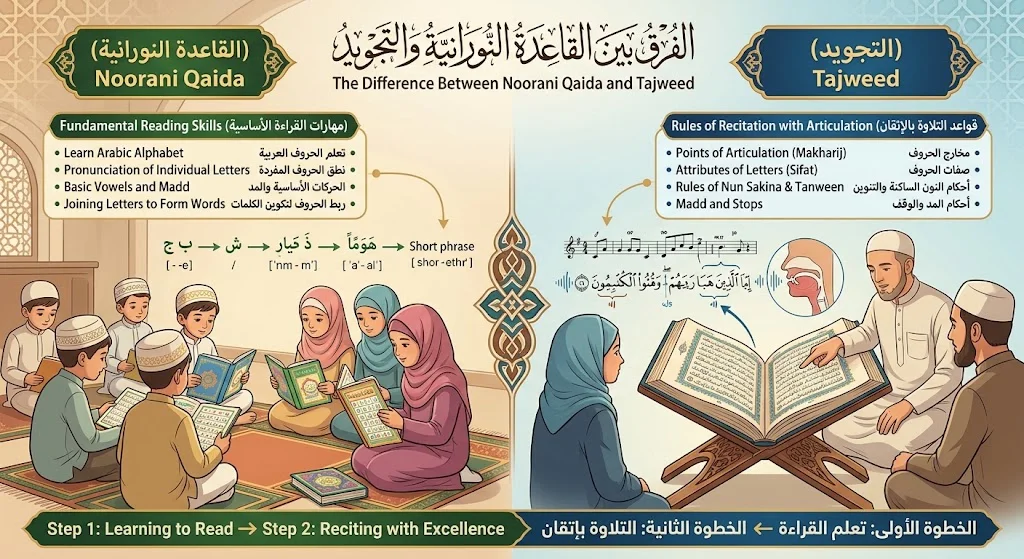
When comparing Noorani Qaida vs Tajweed, the main difference is their role in Quran education. Noorani Qaida provides beginners with the reading foundation they need, while Tajweed teaches the detailed rules required for accurate and proper Quranic recitation.
Noorani Qaida introduces Arabic letters, vowel signs, joined letters, and basic reading patterns in a gradual sequence. This approach helps beginners recognize and pronounce Quranic words before they move into more advanced recitation studies.
Tajweed focuses specifically on how Quranic letters and words should be pronounced during recitation. Its rules include articulation points, letter characteristics, elongation, merging, and other principles that influence correct pronunciation and fluent reading.
Understanding these differences helps learners choose the appropriate starting point. Beginners who are still developing Arabic reading skills can benefit from Qaida first, while students with a solid reading foundation may be ready to study Tajweed more directly.
Can You Learn Tajweed Without Studying Noorani Qaida First?
Students who already read Arabic confidently may be able to begin studying Tajweed without completing a traditional Noorani Qaida course. Their starting point depends on their existing pronunciation, reading ability, and familiarity with Quranic Arabic.
For complete beginners, however, starting with foundational reading skills can make Tajweed easier to understand. Learning how letters and vowel marks work first gives students a stronger base for applying more advanced recitation principles later.
Basic Tajweed Rules Embedded Directly in Noorani Qaida
Noorani Qaida vs Tajweed becomes easier to understand when learners see how foundational reading exercises can introduce basic recitation concepts. Noorani Qaida may cover correct letter pronunciation, short and long vowel sounds, joining patterns, and selected reading rules that prepare students for formal Tajweed study.
This gradual approach allows students to practice pronunciation principles without being introduced to every advanced Tajweed rule at once. As they progress, a qualified tutor can explain how these early skills connect with the more detailed principles used during Quran recitation.
How Noorani Qaida Fixes Common Pronunciation Mistakes (Makharij)

Understanding Noorani Qaida vs Tajweed also involves recognizing the importance of Makharij, or the articulation points of Arabic letters. Correct pronunciation begins with learning where each letter is produced, helping students distinguish between sounds that may appear similar.
Through guided repetition and direct correction, Noorani Qaida lessons can help beginners improve their pronunciation. A tutor can listen to the student’s recitation, identify recurring difficulties, and provide targeted practice to develop clearer and more consistent Quranic reading.
Transitioning from Qaida to Full Quran Recitation
The connection between Noorani Qaida vs Tajweed becomes especially important when students transition from foundational exercises to complete Quran recitation. Before reading longer passages, learners need confidence with Arabic letters, vowel patterns, connected words, and basic pronunciation principles.
A tutor can gradually introduce short Surahs and selected Quranic verses while reinforcing previously learned skills. As students become more confident, lessons can incorporate additional Tajweed rules, regular pronunciation correction, and guided recitation practice to support smoother Quran reading.
Why Is Tajweed Important After Learning Noorani Qaida?
Learning Noorani Qaida gives students a foundation for recognizing Arabic letters, reading vowel patterns, and developing basic pronunciation skills. However, reading the Quran accurately requires more detailed recitation principles, making Tajweed a natural next step after students establish their essential reading foundation.
Tajweed lessons help learners refine letter pronunciation and apply recitation rules while reading Quranic verses. With regular practice and guidance from a qualified tutor, students can improve their accuracy and fluency while building on the skills they developed through Noorani Qaida.
How Long Does It Take to Move From Qaida to Tajweed?
There is no fixed timeframe for moving from Noorani Qaida to Tajweed because each learner progresses differently. Age, Arabic reading ability, pronunciation, lesson frequency, and regular home practice can all influence how quickly a student becomes ready for more advanced recitation.
A qualified tutor can assess the learner’s current skills and identify areas that need additional practice before introducing more detailed Tajweed rules. Consistent online lessons and personalized feedback can help students strengthen their foundation and gradually transition into confident Quran recitation.
Master Both Foundation and Tajweed with Certified Tutors at Itqan
Understanding Noorani Qaida vs Tajweed can help students follow a more organized Quran learning path. At Itqan Academy, students can receive guided online Quran instruction based on their current reading level, learning needs, and progress.
Beginners can establish essential reading and pronunciation skills through Noorani Qaida before progressing toward more advanced recitation. Students with an existing foundation can receive further guidance in Tajweed and Quran recitation, making structured online learning suitable for different stages of Quran education.
FAQs
Is Noorani Qaida the same as Tajweed?
No. Noorani Qaida focuses mainly on foundational Quran reading skills, while Tajweed teaches specific principles for accurate Quranic pronunciation and recitation.
Should beginners learn Noorani Qaida before Tajweed?
Complete beginners can benefit from learning foundational reading skills first. Students who already read Arabic well may be ready to begin Tajweed directly with a qualified tutor.
Can Noorani Qaida Help With Tajweed?
Yes, Noorani Qaida vs Tajweed can be studied together as part of a structured Quran learning path. Noorani Qaida builds foundational reading and pronunciation skills, while Tajweed develops accurate recitation through more detailed rules and guided practice.
Understanding Noorani Qaida vs Tajweed helps learners choose the right path for accurate Quran reading. Noorani Qaida builds essential foundations, while Tajweed develops proper recitation skills. With structured guidance from Itqan Academy, students can progress confidently from basic reading to more advanced Quran recitation.
Read More: