
The story of Ibrahim (peace be upon him) stands as one of the most transformative narratives in Islamic history, illustrating unwavering faith, profound sacrifice, and total devotion to monotheism. Honored in Islam with the prestigious title Khalilullah , Prophet Ibrahim plays a pivotal role in the Quranic narrative.
Itqan NETWORK helps Muslims worldwide explore the story of Prophet Ibrahim through structured online learning and expert guidance, deepening their understanding of Tawheed (the oneness of Allah), strengthening their faith, and learning how to face life’s challenges with patience and trust in the Almighty.
Story of Ibrahim | Early Life and Stand Against Idol Worship
Prophet Ibrahim was born into a society deeply steeped in paganism, polytheism, and idol worship. Even from an early age, his innate wisdom (Fitrah) led him to question the logic of worshiping man-made statues carved from stone and wood.
Challenging His Father and the People of Babylon
Growing up in Babylon, Ibrahim’s primary challenge began within his own household. His father, Azar, was not merely an idol worshiper but a craftsman who sculpted idols for the community. With gentle respect and profound logic, Ibrahim urged his father to abandon useless statues that could neither hear, see, nor benefit anyone.
Despite his loving approach, his father rejected the message and threatened him. Undeterred, Ibrahim confronted the people of Babylon. In a famous act of bravery, he broke the town’s idols while they were away, leaving the largest idol intact with an axe around its neck. When questioned, Ibrahim advised them to ask the largest idol if it could speak—exposing the utter falsehood of their beliefs.
The Miracle of the Fire and Divine Protection
Enraged by his challenge to their heritage and authority, King Nimrod and the leaders of Babylon sentenced Ibrahim to be burned alive. A massive fire was prepared, so intensely hot that Ibrahim had to be cast into it via a catapult.
At that critical moment, the Angel Jibril (Gabriel) came to offer assistance, but Ibrahim relied solely on Allah, uttering his famous reliance: “Allah is sufficient for us, and He is the best disposer of affairs.” Allah commanded the fire: “O fire, be coolness and safety upon Ibrahim” (Quran 21:69). Ibrahim emerged from the raging flames completely unharmed, showcasing a powerful divine miracle that left his persecutors astonished.
Major Trials and Journeys in the Life of Prophet Abraham
The story of Ibrahim is defined by continuous trials, migrations, and absolute submission to Allah’s divine decrees.
Migration for the Sake of Allah
Following his salvation from the fire, Prophet Ibrahim embarked on long journeys to spread the message of monotheism. Leaving his homeland, he migrated through Ur, Haran, Sham (the Levant), Egypt, and Hijaz. Throughout these journeys, he remained steadfast in calling people to worship Allah alone.
When Ibrahim and his wife Hajar were blessed with an infant son, Ismail, Allah commanded Ibrahim to leave Hajar and the baby in a barren, uninhabited valley in Makkah. Exhibiting absolute trust in Allah, Ibrahim obeyed. When Hajar realized this was a divine command, she declared that Allah would not abandon them. This devotion led to the miraculous emergence of the Well of Zamzam and the eventual settlement of Makkah.
The Ultimate Test: The Sacrifice of Ismail (Ishmael)
As Ismail grew into a youth, Ibrahim faced the greatest test of his life. Through a series of true dreams, Allah commanded Ibrahim to sacrifice his beloved son. The story of Ibrahim reaches its spiritual peak in this moment of submission.
When Ibrahim shared the vision with Ismail, the dutiful son responded: “O my father, do as you are commanded. You will find me, if Allah wills, of the steadfast” (Quran 37:102). As Ibrahim prepared to fulfill the command, Allah intervened, declaring that the trial had been fulfilled, and provided a ram from Paradise to be slaughtered in Ismail’s place.
Building the Kaaba and Establishing Monotheism
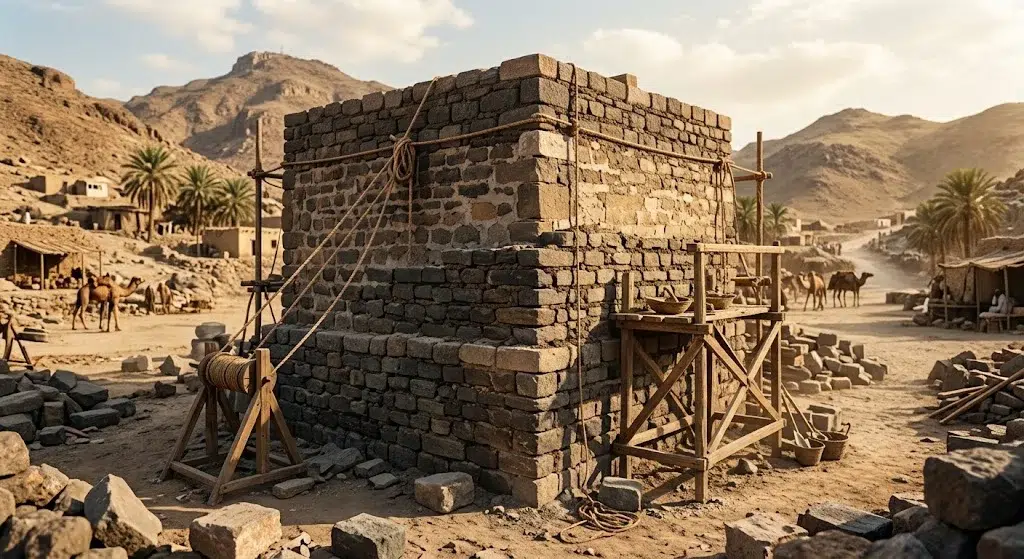
The legacy of Prophet Ibrahim is physically and spiritually anchored in the sacred sanctuary of Makkah.
Raising the Foundations of the House of Allah
Years after the trial of sacrifice, Allah ordered Ibrahim and his son Ismail to construct the Kaaba—the first house of worship dedicated exclusively to the One God. Together, father and son raised the foundations of the Holy House, praying continuously: “Our Lord, accept [this] from us. Indeed You are the Hearing, the Knowing” (Quran 2:127).
Upon completing the structure, Ibrahim stood on a stone—now known as Maqam Ibrahim—and called humanity to perform pilgrimage to the Sacred House. Allah caused his call to echo across generations and lands.
Key Lessons and Spiritual Morals from the Story of Ibrahim
Reflecting on the story of Ibrahim provides timeless lessons for every Muslim seeking spiritual growth and resilience.
Absolute Trust (Tawakkul) and Patience in Allah
The story of Ibrahim demonstrates the true essence of Tawakkul (reliance on Allah). Whether facing execution in Nimrod’s fire or leaving his family in an arid desert, Ibrahim placed his complete trust in Allah’s wisdom. His life teaches us that unwavering patience (Sabr) during hardship always leads to divine honor and success.
The Symbolism of Hajj and Eid al-Adha Roots
Every year, millions of Muslims relive the story of Ibrahim through the rites of Hajj and the celebration of Eid al-Adha:
- Sa’i between Safa and Marwah: Commemorates Hajar’s frantic search for water for infant Ismail.
- Qurbani (Udhiyah): Honors Ibrahim’s willingness to sacrifice his son in obedience to Allah.
- Rami al-Jamarat: Symbolizes Ibrahim’s rejection of Satan’s temptations during the sacrifice test.
Learn Quranic Stories and Islamic History Online with Itqan Network
Itqan PLATFORM provides structured online courses rooted in authentic Islamic scholarship, helping students of all ages explore the spiritual lessons of the story of Ibrahim while deepening their understanding of Quranic narratives, Islamic history, and the Arabic language.
Al-Azhar Certified Tutors (Male & Female)
At Itqan, we take pride in our qualified faculty consisting of Al-Azhar certified tutors (male & female). Our instructors bring deep knowledge, authentic tajweed expertise, and engaging teaching methodologies to help you and your children master Quranic recitation, memorization, and comprehension from the comfort of your home.
Whether you want to deepen your understanding of Quranic tafseer or teach your children the heroic lives of the Prophets, Itqan Network provides personalized, one-on-one interactive sessions tailored to your schedule and learning goals.
Frequently Asked Questions (FAQs)
What is the main message of the story of ibrahim in the Quran?
The story of ibrahim represents the ultimate journey of pure monotheism (Tawheed), complete surrender to Allah’s commands, and steadfastness in faith despite severe family and societal opposition.
Why is Prophet Ibrahim called Khalilullah?
He is known as Khalilullah because of his extreme devotion, love, and absolute sincerity in following Allah’s path above all else.
Where can families study quranic stories and Islamic history online?
Individuals and families can enroll in structured online Islamic studies and prophetic history classes at platforms like Itqan Network, guided by native, Al-Azhar certified tutors.
Conclusion
The story of Ibrahim is far more than a historical account; it is an enduring journey of faith, sacrifice, and divine devotion that continues to inspire believers worldwide. By studying the story of Ibrahim, we learn how to stand firm in our values, build unwavering trust in Allah, and strive for spiritual excellence.
Are you ready to enrich your spiritual journey and master the noble knowledge of the Quran? Enroll with Itqan today and start your learning journey with our expert Al-Azhar certified tutors.